Why This Book Matters
A rulebook can shape banking decisions across the world without belonging to any single country. The Basel Accords emerged from the need for greater international cooperation in banking supervision, yet their practical effect reaches into credit decisions, bank balance sheets and the availability of finance.
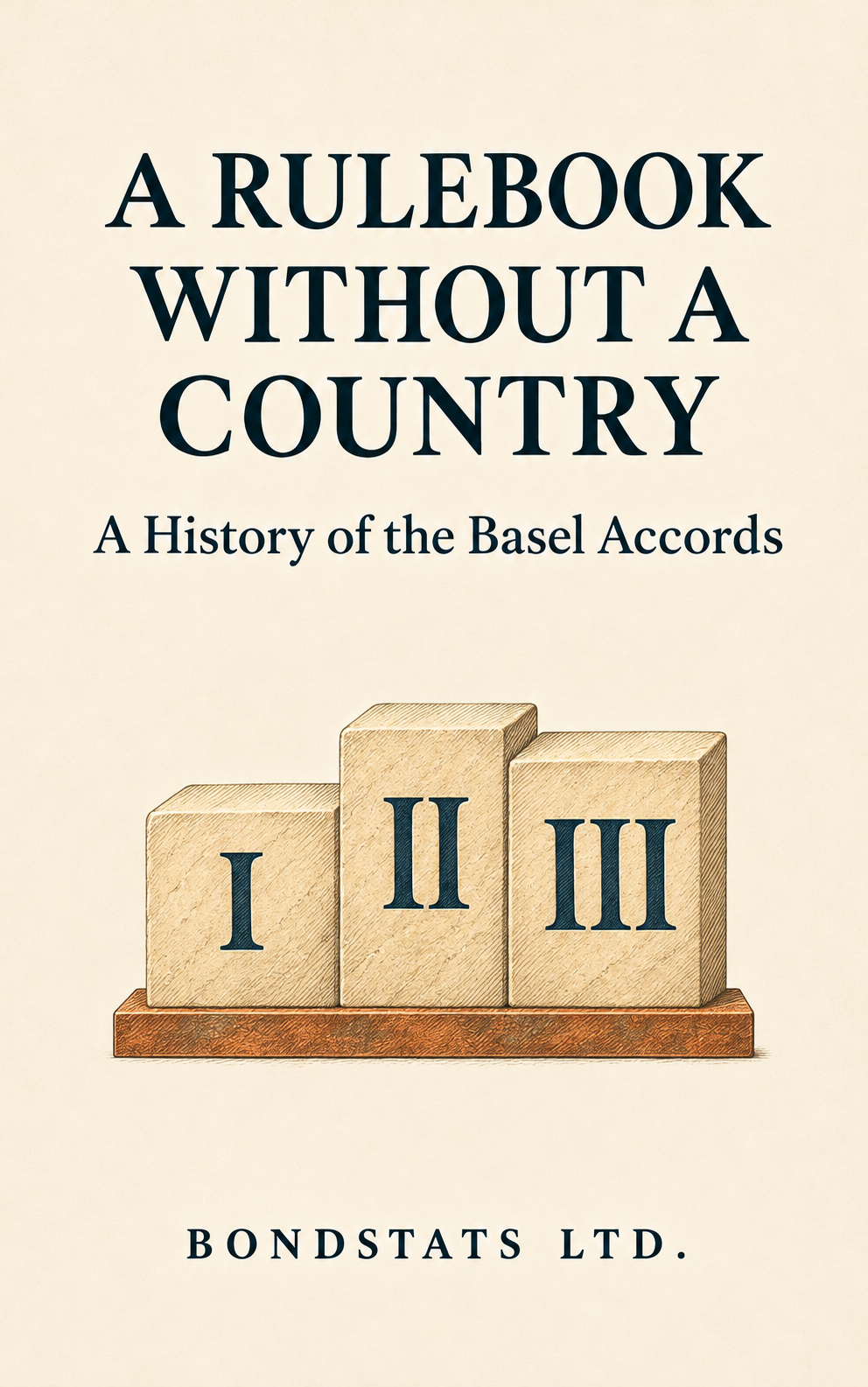
A Rulebook Without a Country traces the history of this cross-border regulatory project, from the institutional concerns that followed the collapse of Bankhaus Herstatt in 1974 to the successive Basel frameworks and the reforms that followed the global financial crisis.
BondStats Publication
Published by BondStats Ltd., A Rulebook Without a Country examines how the Basel Committee’s international standards developed and why banking rules negotiated across jurisdictions became central to the modern financial system.
Rather than treating Basel I, Basel II and Basel III as isolated sets of ratios, the book follows the problems each framework sought to address and the tensions between financial resilience, international coordination and the provision of credit.
📘 Available in Kindle and Paperback formats.What You’ll Learn
- Why the Herstatt episode became part of the history of international banking supervision
- How the Basel Committee developed a shared approach across national regulators
- What changed from Basel I to Basel II and Basel III
- Why bank capital, leverage and liquidity rules address different risks
- How global regulatory standards influence lending and financial stability
Call-to-Action
Explore how a set of international banking standards came to shape the decisions of financial institutions around the world.
Buy on Amazon