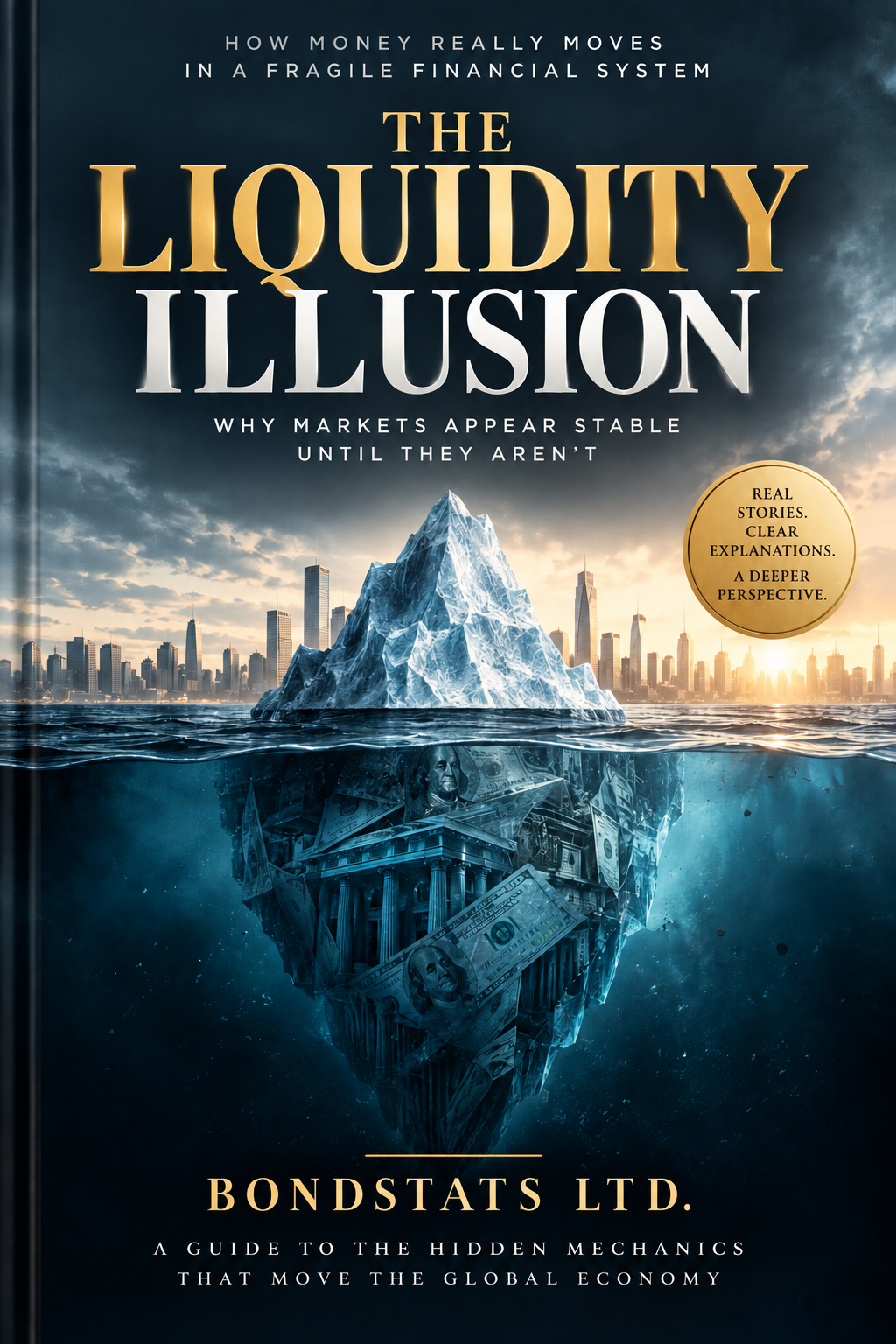
Why This Book Matters
Markets appear liquid because, most of the time, money moves without resistance. Bonds trade, companies obtain financing, collateral supports borrowing and investors can convert assets into cash without thinking about the machinery that makes those transactions possible. That apparent stability creates one of the most persistent illusions in finance: that liquidity is simply there.
The Liquidity Illusion examines what happens when that machinery comes under pressure. It follows the connections between funding, collateral, dealers, repo markets, credit and central banks to explain why markets that look deep and resilient in normal conditions can fracture when too many balance sheets need cash at the same time.
BondStats Publication
Published by BondStats Ltd., The Liquidity Illusion explores the financial architecture beneath market prices. Through the mechanics behind the global financial crisis, the March 2020 dash for cash and the 2022 British gilt shock, it shows how funding pressure can become forced selling, how falling prices can create additional demands for cash and why stress can travel rapidly between markets.
Rather than trying to predict the next crash, the book develops a framework for understanding where liquidity actually comes from, how leverage and collateral amplify pressure, what happens when dealers lose the capacity to absorb selling and which changes can reveal that the system is becoming more fragile.
📘 Available in Kindle and Paperback formats.What You’ll Learn
- The difference between market liquidity, funding liquidity and monetary liquidity
- Where the balance-sheet capacity that allows markets to function actually comes from
- How repo markets and collateral connect securities to short-term funding
- Why dealer balance sheets can become a bottleneck during periods of heavy selling
- How leverage, margin calls and collateral demands can turn price moves into demands for cash
- Why the dash for cash can spread stress across markets that initially appear unrelated
- What the global financial crisis reveals about the relationship between funding and market liquidity
- Why March 2020 exposed fragility even in the U.S. Treasury market
- How the 2022 British gilt shock demonstrated the speed of liquidity feedback loops
- How to map liquidity conditions before market functioning begins to deteriorate
Call-to-Action
See the machinery beneath market liquidity — where cash comes from, how pressure propagates and why markets can break when the financial system loses the capacity to keep money moving.
Buy on Amazon