
Asset Classes Explained
Understand the main asset classes and how they contribute to a diversified investment portfolio.
What Are Asset Classes?
Asset classes are groups of investments that share similar characteristics, risk profiles and expected returns. Combining different asset classes can help investors build diversified portfolios and manage overall risk.
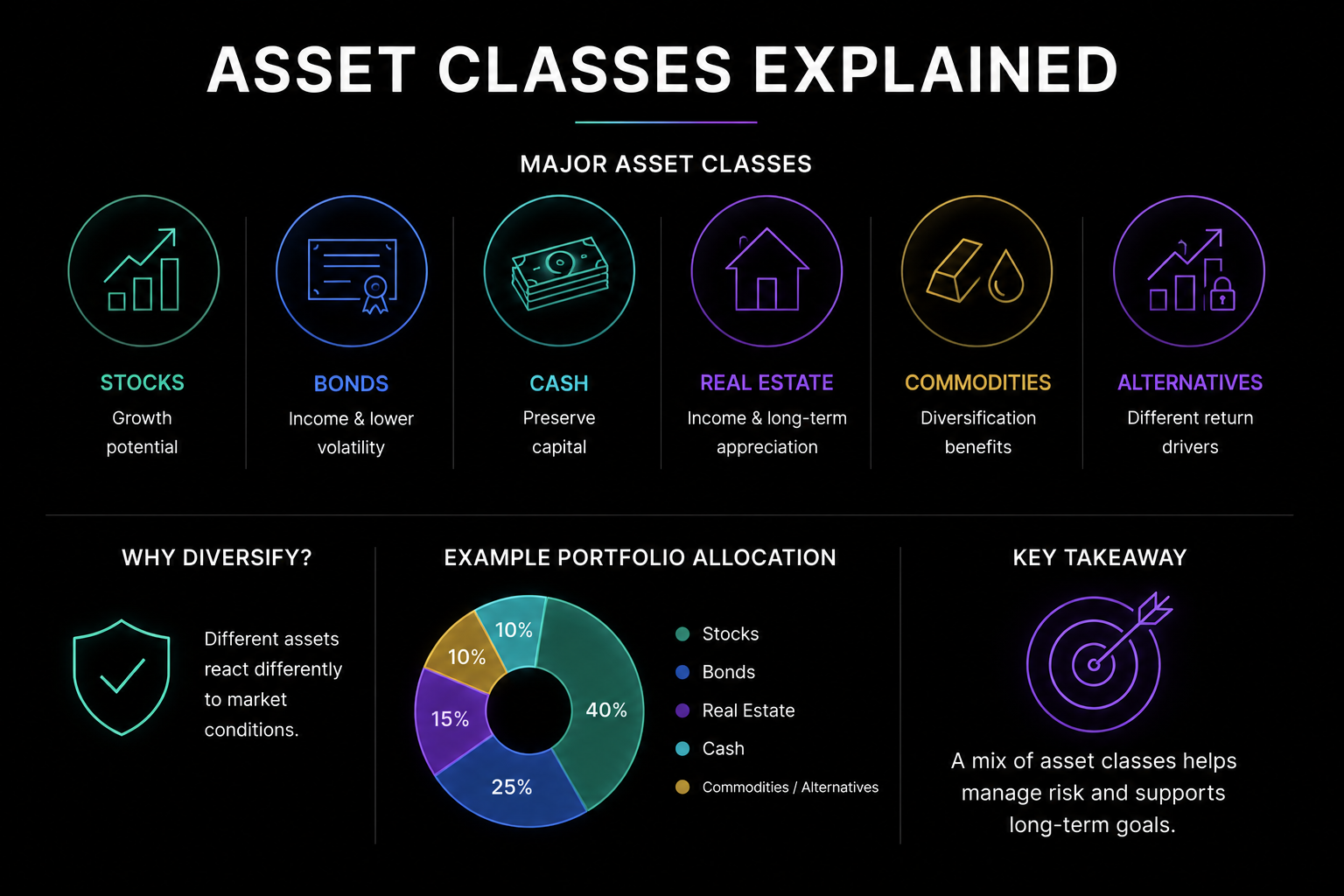
Major Asset Classes
Stocks
Represent ownership in a company and offer long-term growth potential.
Bonds
Debt securities that typically provide regular income and lower volatility than stocks.
Cash & Cash Equivalents
Highly liquid investments designed to preserve capital.
Real Estate
Property investments that may provide rental income and long-term appreciation.
Commodities
Physical assets such as gold, oil or agricultural products that can diversify portfolios.
Alternative Investments
Assets such as private equity, hedge funds or infrastructure that may behave differently from traditional investments.
Why Asset Allocation Matters
Each asset class responds differently to economic conditions. Combining multiple asset classes may help reduce portfolio risk while supporting long-term investment objectives.
Key Takeaways
Asset classes form the foundation of portfolio construction. Understanding how different investments behave can help investors create balanced portfolios that align with their financial goals and risk tolerance.