
Commodity Trading in Switzerland
The Hidden Hub of Global Commodity Markets
Introduction
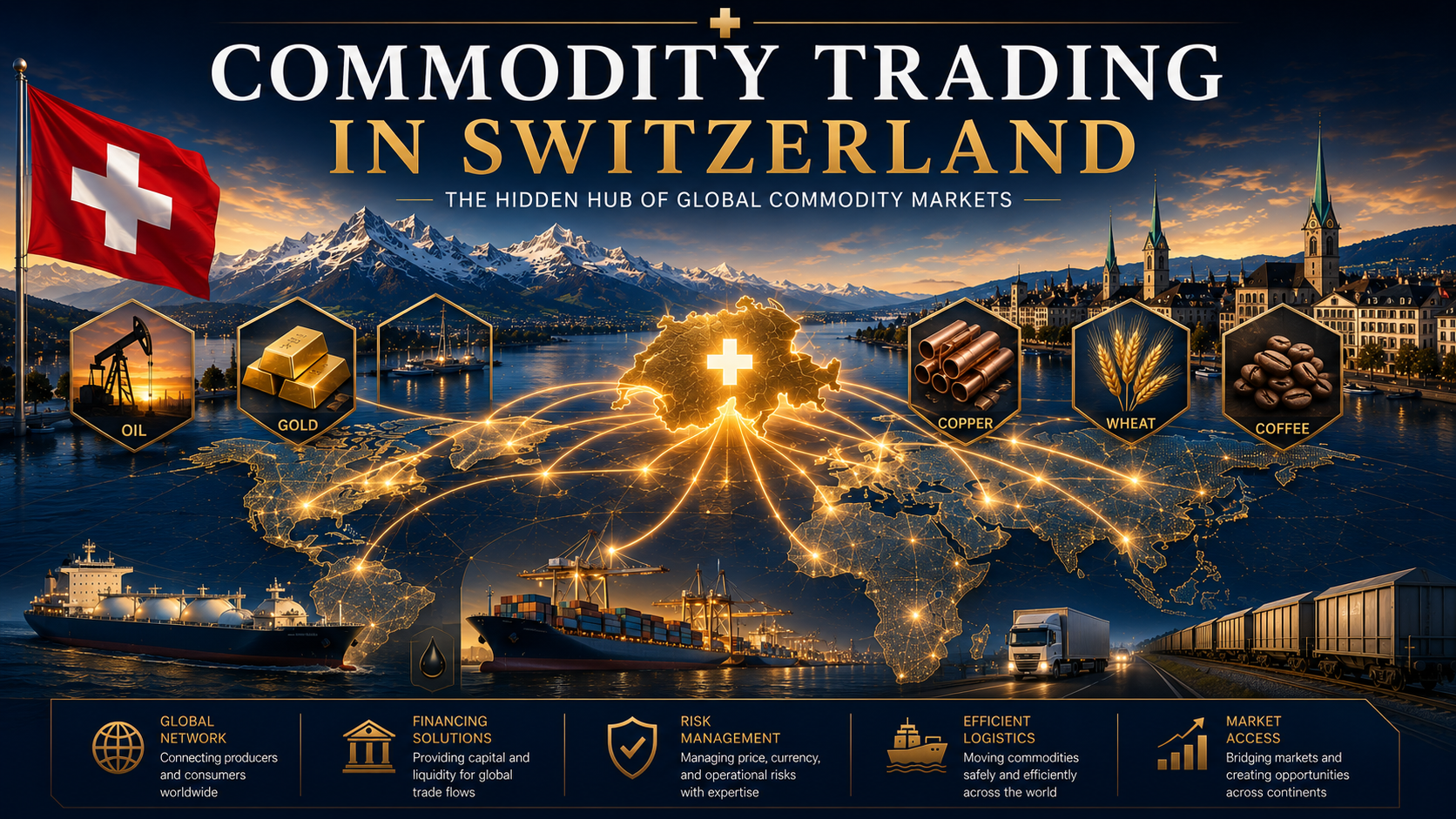
When people think about global commodity trading, they often think of oil fields, mines, or major ports and only a few realize that Switzerland has become one of the world’s most important centers for commodity trading.
Although the country produces relatively few natural resources itself, it plays a significant role in connecting producers, traders, financiers, and consumers across global markets.
Today, Switzerland serves as a major hub for the international trade of energy, metals, and agricultural products.
What Are Commodities?
Commodities are raw materials used throughout the global economy.
Examples include:
Oil
Natural Gas
Gold
Copper
Wheat
Coffee
Sugar
These resources are essential for industry, transportation, energy production, and everyday life.
Why Switzerland?
Several factors have helped Switzerland become a leading commodity trading center.
Strategic Location
Situated in the heart of Europe, Switzerland provides easy access to international markets.
Financial Expertise
Swiss financial institutions support commodity firms through financing, risk management, and capital markets.
Stable Business Environment
Political stability, strong legal institutions, and a predictable regulatory environment have attracted international trading companies.
Global Connectivity
Swiss commodity firms operate across continents, linking producers and consumers worldwide.
A Global Trading Hub
Switzerland has become a major center for commodity trading activities and many international trading firms coordinate global transactions, logistics, financing, and risk management from Swiss offices.
This allows commodities to move efficiently from resource-producing regions to global markets.
Financing Commodity Trade
Commodity trading requires large amounts of capital.
Financial institutions provide:
Trade finance
Credit facilities
Risk management solutions
Currency hedging
These services help facilitate the flow of goods across international markets.
Managing Risk
Commodity prices can fluctuate significantly.
Trading firms use various tools to manage risks associated with:
Price volatility
Currency movements
Supply disruptions
Transportation challenges
Effective risk management is a key component of modern commodity markets.
Global Importance
Commodity trading influences:
Energy markets
Industrial production
Food supply chains
International trade
Through its role as a trading and financial center, Switzerland helps support the movement of critical resources around the world.
Conclusion
Switzerland’s importance in commodity trading extends far beyond its physical size and by combining financial expertise, global connectivity, and a stable business environment, the country has become one of the most important hubs in global commodity markets.
Understanding Switzerland’s role in commodity trading reveals another important layer of its influence within the international financial system.