
Portfolio Risk Explained
Understand the different types of portfolio risk and how they may affect long-term investment performance.
What Is Portfolio Risk?
Portfolio risk refers to the possibility that the value of an investment portfolio may decline due to market movements, economic events or changes affecting individual investments.
Every portfolio carries some level of risk, but understanding these risks can help investors build portfolios that better match their financial goals and risk tolerance.
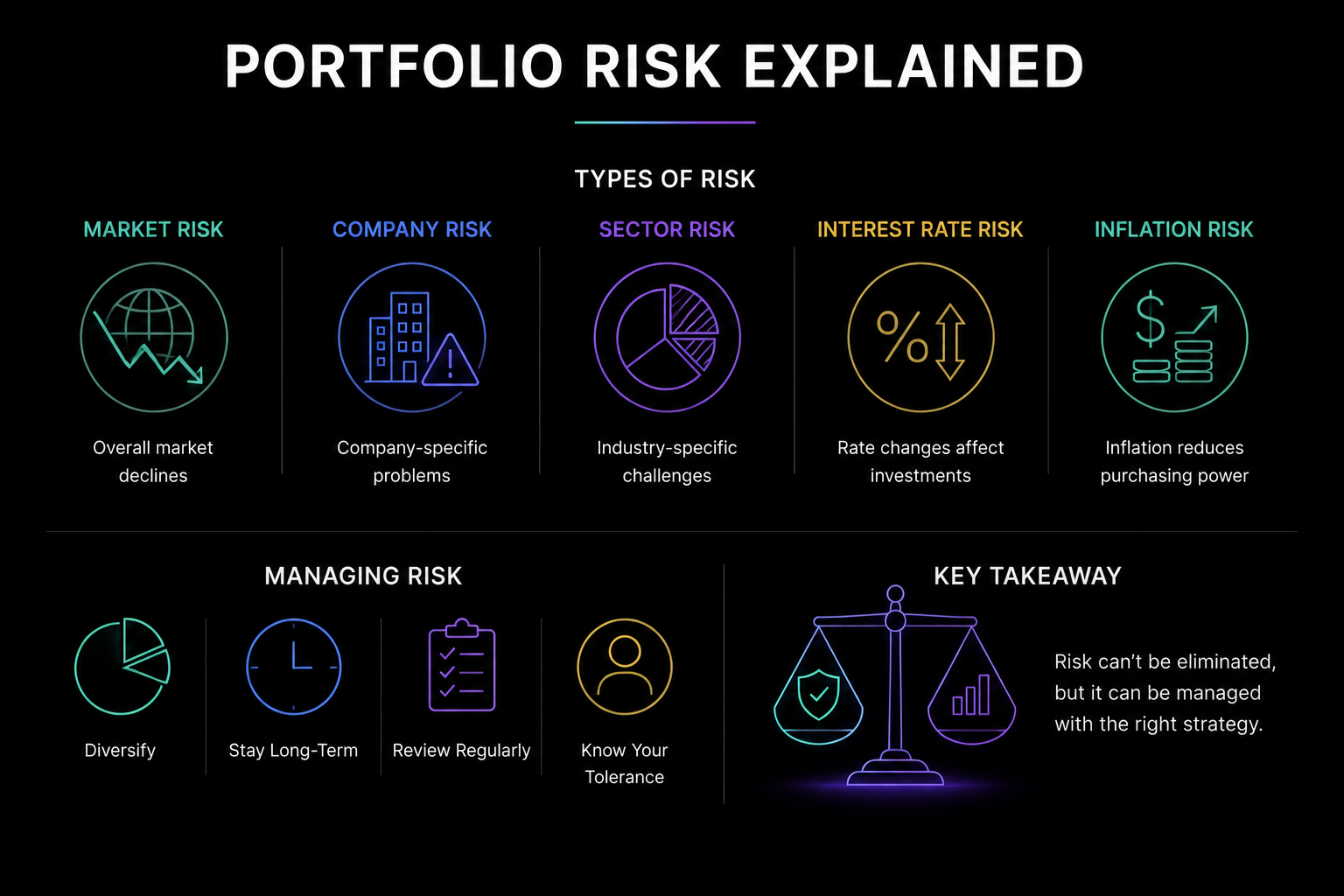
Common Types of Portfolio Risk
Market Risk
The risk that the overall market declines, affecting most investments.
Company Risk
The possibility that a specific company experiences financial difficulties or poor performance.
Sector Risk
Concentrating investments in one industry may increase exposure to sector-specific events.
Interest Rate Risk
Changes in interest rates can significantly affect bond prices and some stock sectors.
Inflation Risk
Inflation may reduce the purchasing power of future investment returns.
Managing Portfolio Risk
Investors often manage risk by:
Diversifying investments
Maintaining a long-term perspective
Reviewing portfolios regularly
Matching investments to their risk tolerance
Key Takeaways
Portfolio risk cannot be eliminated, but it can often be managed through diversification, appropriate asset allocation and a disciplined long-term investment strategy.