
What Is Risk Tolerance?
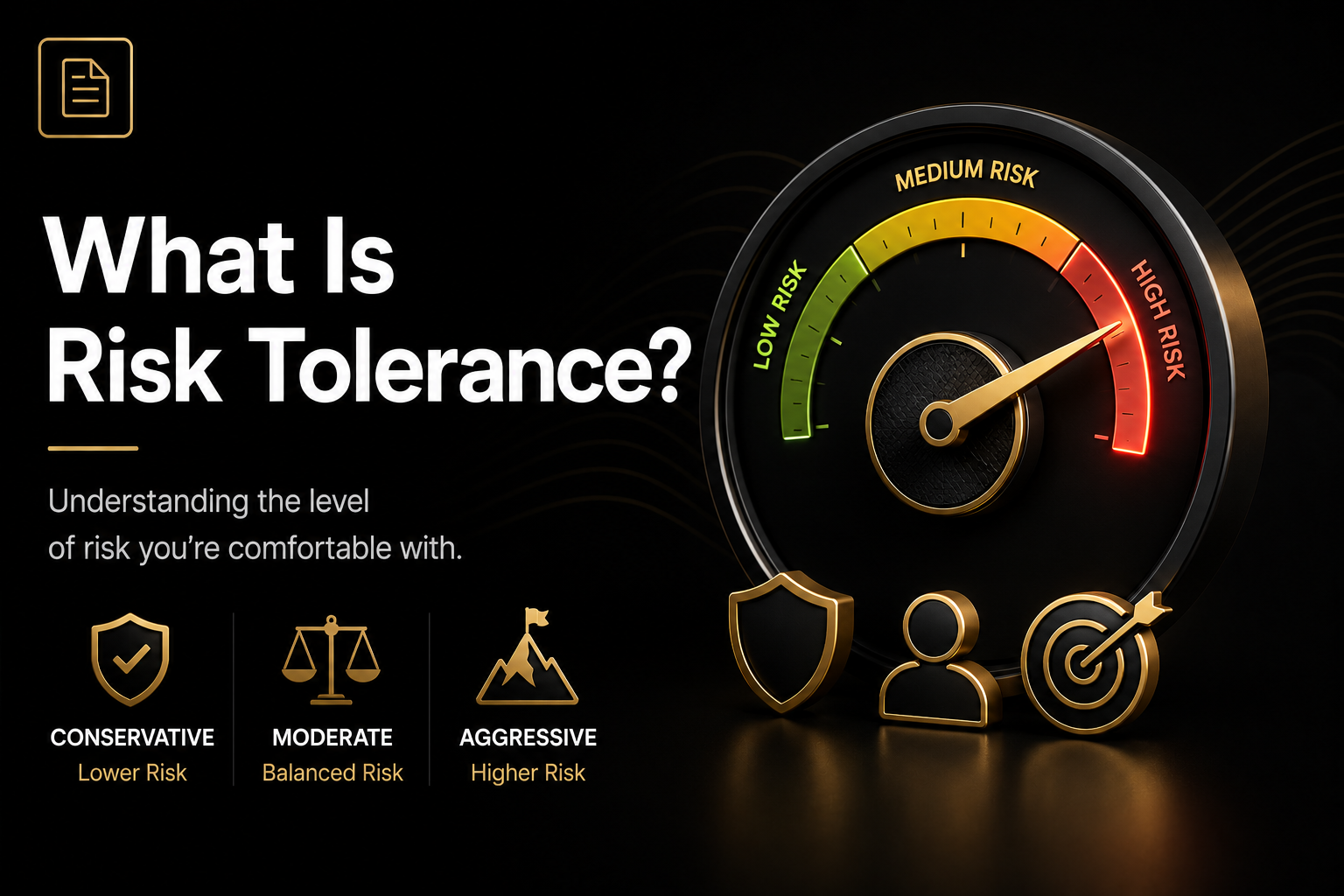
Risk tolerance refers to an investor’s ability and willingness to accept fluctuations in the value of investments.
Why Does Risk Tolerance Matter?
Investment decisions are not based solely on returns.
Risk tolerance helps investors:
Manage emotional reactions during market downturns
Build portfolios that match their objectives
Avoid taking excessive risks
Maintain long-term discipline
Stay invested during periods of volatility
Understanding risk tolerance is an important part of successful investing.
Factors That Influence Risk Tolerance
Investment Horizon
Investors with longer time horizons may be able to tolerate greater short-term volatility. Shorter time horizons often require more conservative approaches.
Financial Goals
Retirement planning, income generation and wealth accumulation may require different levels of risk.
Income and Financial Situation
Stable income and strong financial reserves may allow investors to accept greater investment risk.
Emotional Comfort
Risk tolerance is not only financial but also psychological. Some investors are comfortable with large market swings, while others prefer greater stability.
Types of Risk Tolerance
Conservative
Conservative investors prioritize capital preservation and lower volatility.
Typical allocations may emphasize:
Bonds
Cash
High-quality income assets
Moderate
Moderate investors seek a balance between growth and stability.
Portfolios often include a combination of:
Stocks
Bonds
Diversified funds
Aggressive
Aggressive investors focus on long-term growth and are willing to accept higher volatility.
Portfolios typically have larger allocations to:
Stocks
International markets
Growth-oriented investments
Risk Tolerance and Asset Allocation
Risk tolerance plays a major role in determining asset allocation.
Generally:
Lower risk tolerance may lead to larger bond allocations.
Higher risk tolerance may lead to greater exposure to stocks.
There is no universally correct allocation. Suitable portfolios depend on individual circumstances and objectives.
Risk Tolerance vs Risk Capacity
Risk tolerance reflects how much risk an investor is comfortable taking but risk capacity refers to how much risk an investor can financially afford to take.
Both concepts are important when building long-term portfolios.
Can Risk Tolerance Change?
Risk tolerance may change over time due to:
Age
Income changes
Financial goals
Life events
Market experiences
Periodic reviews help ensure that investment strategies remain aligned with current circumstances.
Key Takeaways
✓ Risk tolerance measures an investor’s willingness and ability to accept risk.
✓ Time horizon, financial goals and emotions all influence risk tolerance.
✓ Conservative, moderate and aggressive investors have different approaches.
✓ Risk tolerance helps determine asset allocation.
✓ Understanding risk tolerance is an essential foundation of long-term investing.