
Inflation Explained
Why Prices Rise Over Time
Introduction
Inflation is one of the most important forces in the modern economy and it affects the cost of living, savings, investments, wages, interest rates, and financial markets.
Although inflation is often discussed in terms of rising prices, it ultimately reflects changes in the purchasing power of money.
What Is Inflation?
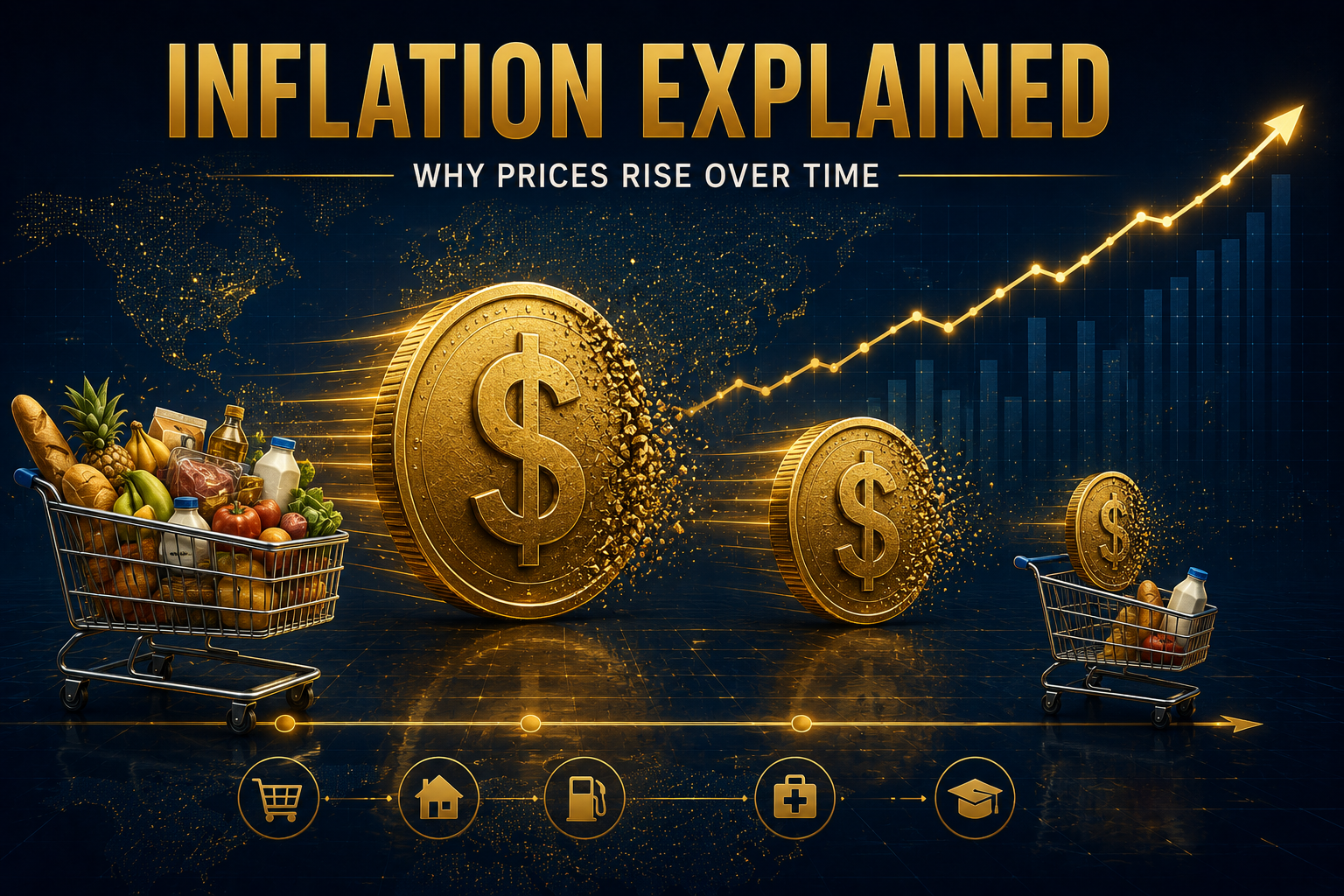
Inflation refers to a general increase in prices across an economy over time and when inflation occurs, each unit of currency buys fewer goods and services than before.
In other words, the purchasing power of money declines.
Why Does Inflation Happen?
Several factors can contribute to inflation:
Rising demand for goods and services
Higher production costs
Expanding money supply
Supply chain disruptions
Energy and commodity price shocks
In reality, inflation is often influenced by multiple factors simultaneously.
Inflation and Purchasing Power
One of the most important effects of inflation is the gradual erosion of purchasing power.
For example:
A basket of goods that costs $100 today
May cost significantly more in the future
Even moderate inflation can have a substantial impact over long periods.
How Central Banks Respond
Central banks monitor inflation closely.
When inflation becomes too high, they may:
Raise interest rates
Tighten financial conditions
Reduce liquidity
These measures are designed to slow economic activity and help stabilize prices.
Inflation and Financial Markets
Inflation influences many areas of finance:
Bond yields
Interest rates
Stock valuations
Currency values
Investment decisions
Because of these effects, inflation is one of the most closely watched economic indicators.
Conclusion
Inflation is the process through which prices rise and purchasing power declines over time and understanding inflation helps explain interest rates, central bank decisions, bond markets, and many of the economic forces that shape everyday life.