
What Is an ETF?
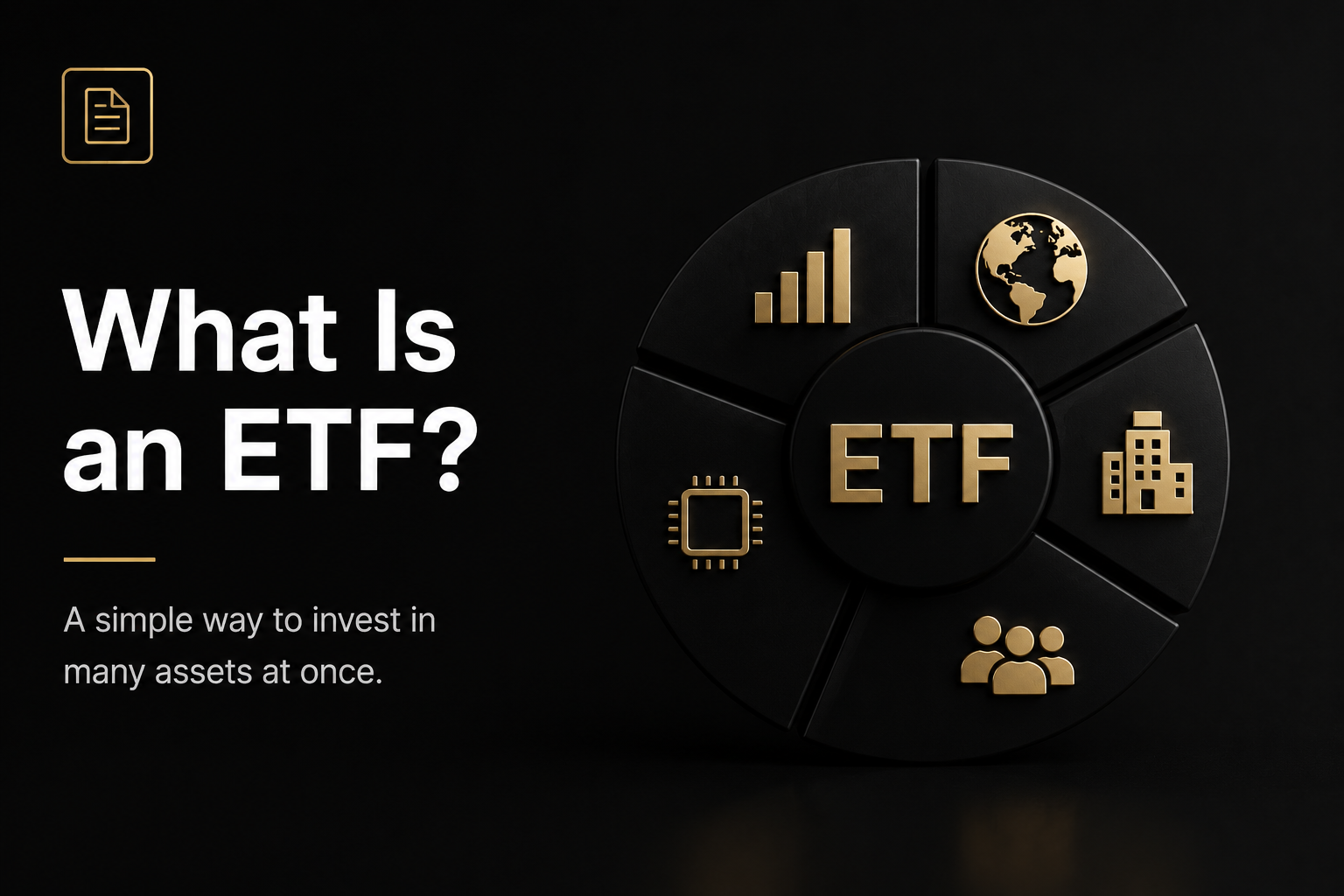
An Exchange-Traded Fund (ETF) is an investment fund that holds a collection of assets and trades on stock exchanges like an individual stock.
How Do ETFs Work?
ETFs pool money from many investors and invest in a basket of assets such as:
Stocks
Bonds
Commodities
Real Estate
International Markets
Shares of the ETF can then be bought and sold throughout the trading day, just like stocks.
Why Are ETFs Popular?
ETFs have become popular because they offer:
Diversification
Liquidity
Transparency
Low Costs
Easy Market Access
They are widely used by both individual and institutional investors.
Types of ETFs
Equity ETFs
Track stock indexes such as the S&P 500 or MSCI World.
Bond ETFs
Provide exposure to government bonds, corporate bonds and fixed-income markets.
Sector ETFs
Focus on specific industries such as technology, healthcare or energy.
Commodity ETFs
Track commodities such as gold, silver or oil.
International ETFs
Offer exposure to foreign markets and emerging economies.
ETFs vs Mutual Funds
Both ETFs and mutual funds provide diversification, but ETFs typically:
Trade throughout the day
Have lower expense ratios
Offer greater flexibility
Provide more transparency
Mutual funds, on the other hand, are generally priced once per day.
Risks of ETFs
Although ETFs are diversified, they are not risk-free.
Investors should consider:
Market Risk
ETF values fluctuate with the underlying assets.
Interest Rate Risk
Bond ETFs are sensitive to changes in interest rates.
Sector Concentration
Sector-specific ETFs may be more volatile.
Currency Risk
International ETFs can be affected by exchange rate movements.
ETFs and Long-Term Investing
ETFs are commonly used for:
Retirement Planning
Portfolio Diversification
Passive Investing
Income Strategies
Long-Term Wealth Building
Their flexibility and broad market exposure have made them one of the most popular investment vehicles worldwide.
Key Takeaways
✓ ETFs are investment funds that trade like stocks.
✓ They provide diversified exposure to multiple assets.
✓ ETFs can invest in stocks, bonds, commodities and international markets.
✓ Low costs and flexibility have contributed to their popularity.
✓ ETFs play an important role in long-term portfolio construction.