
Nominal Return vs Real Return
Understanding why inflation matters when measuring investment performance
What Is a Nominal Return?
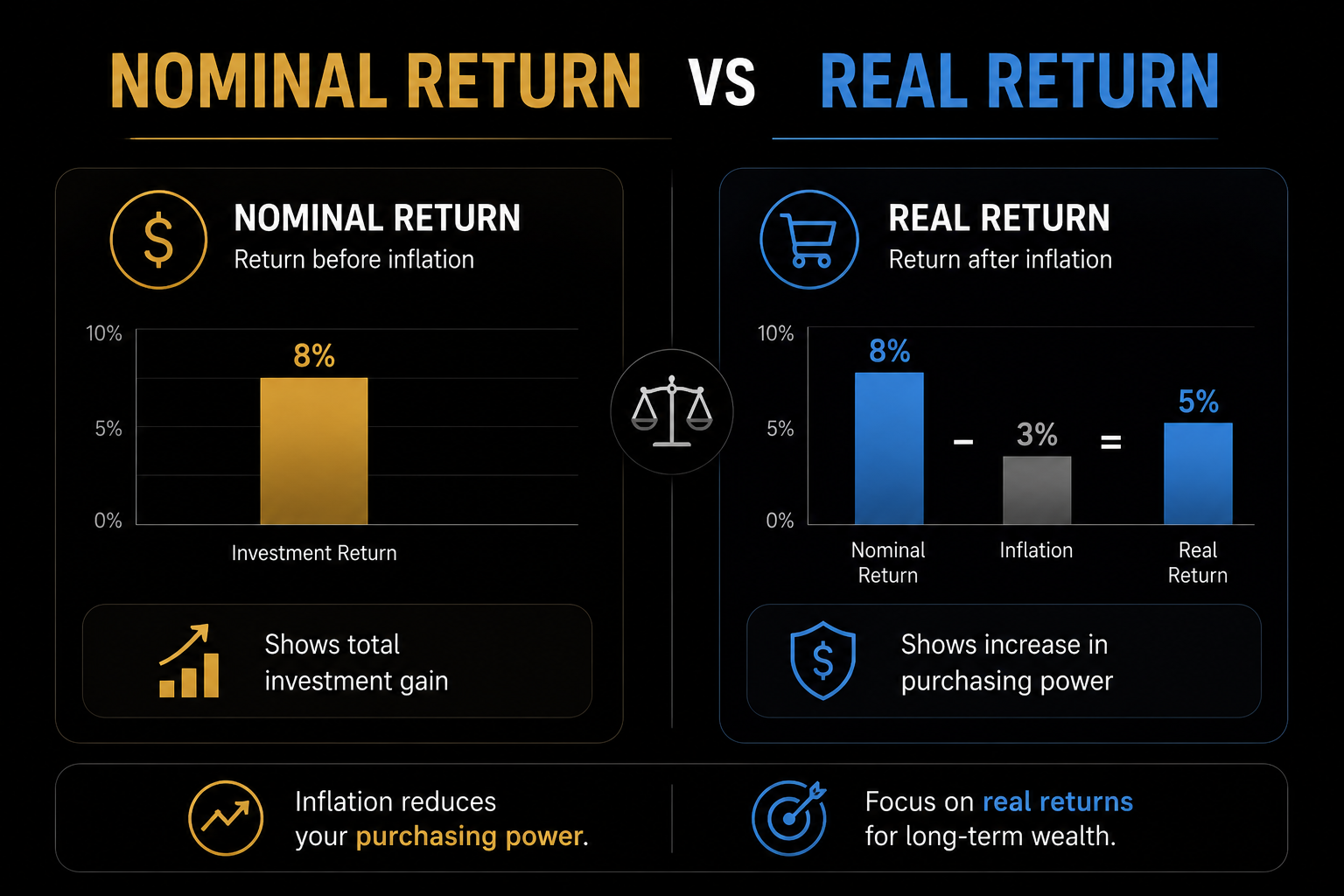
A nominal return is the total return an investment generates before adjusting for inflation. It represents the percentage gain shown on an investment but does not reflect changes in purchasing power.
For example, if an investment grows by 8% in one year, its nominal return is 8%.
What Is a Real Return?
A real return measures an investment’s return after accounting for inflation and it reflects how much an investor’s purchasing power has actually increased.
If an investment returns 8% while inflation is 3%, the real return is approximately 5%.
Key Differences
Nominal Return
Measures:
Total investment performance
Percentage gain before inflation
Reported investment return
Real Return
Measures:
Purchasing power
Inflation-adjusted performance
Actual increase in wealth
Why Inflation Matters
Inflation reduces the purchasing power of money over time and even if an investment produces positive returns, rising prices may reduce the real value of those gains.
Understanding real returns helps investors evaluate long-term wealth creation more accurately.
Which Measure Is More Important?
Both are useful because nominal returns show how an investment performed and real returns show how much purchasing power an investor actually gained.
For long-term investing, real returns often provide a clearer picture of investment success.
Common Misconceptions
A positive nominal return does not always mean investors become wealthier in real terms and if inflation exceeds investment returns, purchasing power can decline despite positive nominal gains.
Key Takeaways
✓ Nominal return measures investment performance before inflation.
✓ Real return adjusts returns for inflation.
✓ Inflation affects purchasing power over time.
✓ Real returns provide a more accurate measure of long-term wealth creation.
✓ Investors should consider both nominal and real returns when evaluating performance.