
Nikkei 225
How the Nikkei 225 Measures the Performance of Japan’s Leading Public Companies
Introduction
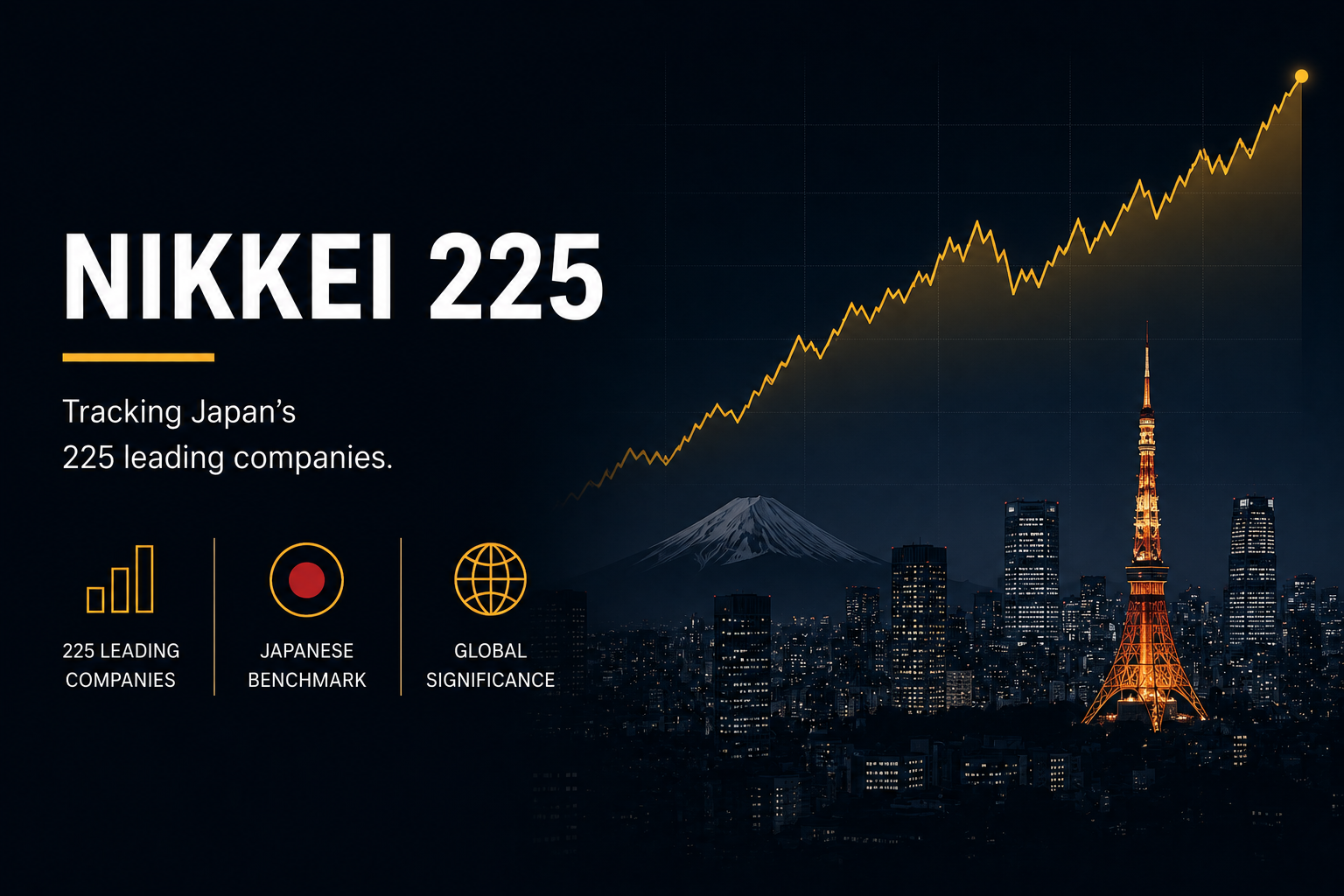
The Nikkei 225 is Japan’s best-known stock market index and one of the most closely followed equity benchmarks in Asia. It tracks 225 leading companies listed on the Tokyo Stock Exchange, providing investors with a broad measure of Japan’s corporate sector and the country’s economic performance.
As the flagship index of the world’s fourth-largest economy, the Nikkei 225 plays a significant role in global financial markets and is widely monitored by investors worldwide.
The History of the Nikkei 225
The Nikkei 225 was first calculated in 1950 by Nikkei Inc. and has become one of the oldest and most recognized stock market indices in Asia. Over the decades, it has reflected Japan’s rapid post-war economic expansion, the asset price bubble of the 1980s, and the country’s ongoing technological and industrial development.
Today, it remains the benchmark for the Japanese equity market.
How the Nikkei 225 Works
The index tracks 225 major companies listed on the Tokyo Stock Exchange unlike most major global indices, the Nikkei 225 is price-weighted, meaning companies with higher share prices have a greater influence on the index than companies with lower share prices.
The index includes companies from sectors such as:
Technology
Automotive
Electronics
Industrials
Financial Services
Consumer Goods
Healthcare
Why the Nikkei 225 Matters
The Nikkei 225 is widely used to:
Measure Japan’s stock market performance.
Benchmark investment portfolios.
Track corporate earnings.
Support ETFs and index funds.
Monitor investor sentiment.
Assess the strength of Japan’s economy.
It remains Japan’s most recognized equity benchmark.
The Nikkei 225 and Global Markets
Movements in the Nikkei 225 often reflect:
Asian market sentiment.
Global economic growth.
Export demand.
Currency movements.
Technology sector performance.
International capital flows.
Because Japan is one of the world’s largest economies, the index has significant influence on global financial markets.
Advantages of the Nikkei 225
The index offers several advantages:
Exposure to Japan’s largest companies.
Strong international recognition.
Long performance history.
Broad sector representation.
High liquidity.
Global investment benchmark.
These characteristics have made it one of the world’s most influential stock market indices.
Key Facts
Launched: 1950
Companies: 225
Weighting Method: Price-Weighted
Coverage: Leading Companies Listed on the Tokyo Stock Exchange
Known For: Benchmark of the Japanese Stock Market
Global Importance: Asia’s most recognized stock market index and one of the world’s leading equity benchmarks
Conclusion
The Nikkei 225 serves as the benchmark for Japan’s equity market and provides investors with valuable insight into one of the world’s largest and most innovative economies. By tracking many of Japan’s leading companies across multiple industries, the index reflects both domestic economic conditions and global market trends. As a result, the Nikkei 225 remains an essential reference point for investors following Asian and international financial markets.