
What Is a Monetary System?
Understanding How Money Functions Within an Economy
Understanding How Money Functions Within an Economy
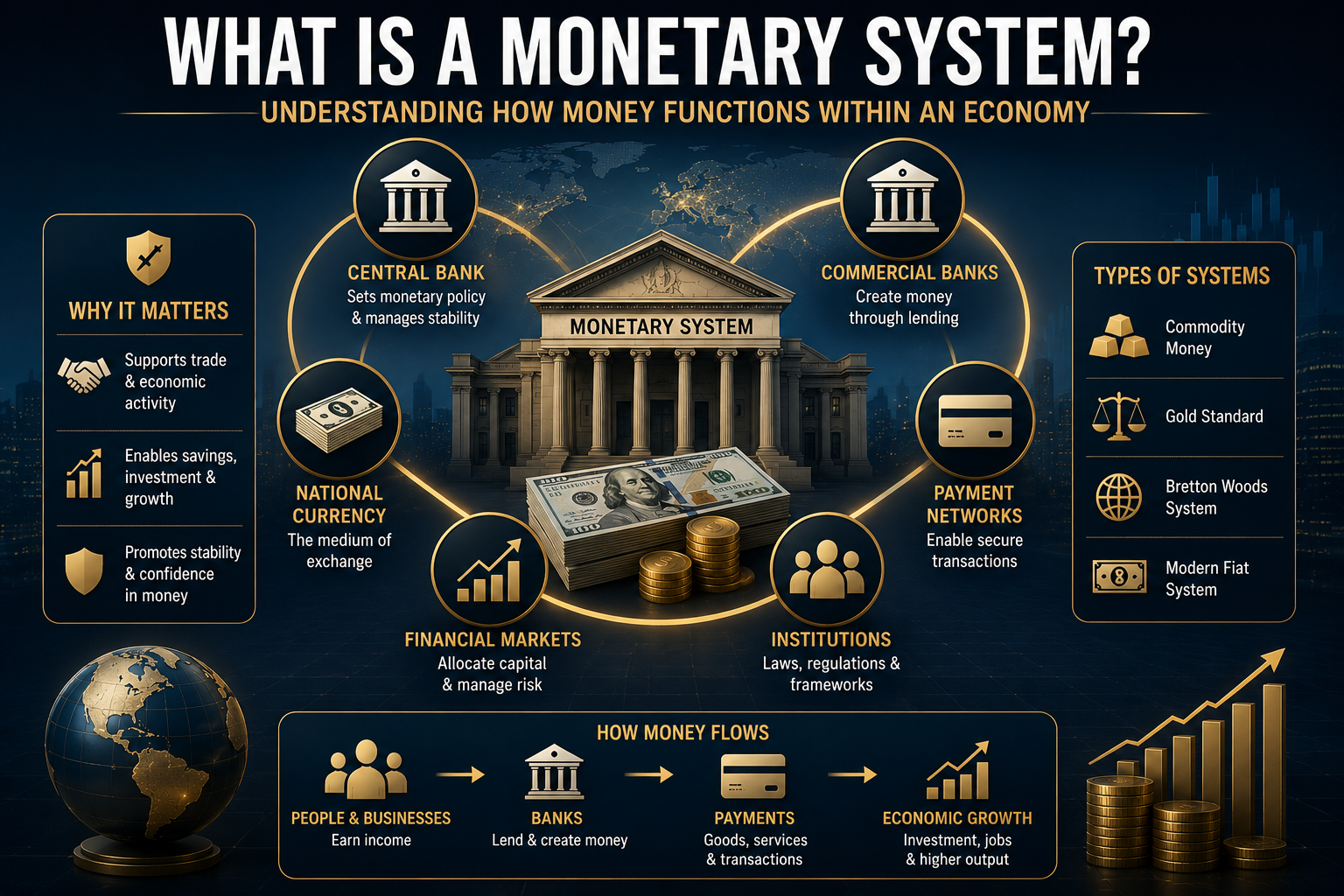
A monetary system is the framework that governs how money is created, distributed, and used within an economy and this includes the institutions, rules, and mechanisms that allow money to serve as a medium of exchange, store of value, and unit of account.
Why Is a Monetary System Important?
A functioning monetary system provides the foundation for economic activity.
It helps:
• Facilitate trade and commerce
• Support savings and investment
• Enable lending and borrowing
• Promote economic stability
• Maintain confidence in money
Key Components of a Monetary System
Most modern monetary systems include:
• A national currency
• A central bank
• Commercial banks
• Payment networks
• Financial markets
• Monetary policy frameworks
Together, these components help manage the flow of money throughout the economy.
Types of Monetary Systems
Throughout history, societies have used different monetary systems.
Examples include:
• Commodity Money Systems (gold and silver)
• The Gold Standard
• Bretton Woods System
• Modern Fiat Money Systems
Each system operates under different rules and mechanisms.
How Modern Monetary Systems Work
Today, most countries use fiat money systems and the money is not backed by a physical commodity but by trust in the government and central bank.
Central banks manage interest rates, money supply, and financial stability while commercial banks create additional money through lending.
Challenges Facing Monetary Systems
Monetary systems must balance growth, stability, and confidence.
Common challenges include:
• Inflation
• Deflation
• Financial crises
• Excessive debt
• Currency instability
• Changes in global trade and capital flows
Conclusion
A monetary system is the foundation of modern economic activity. It determines how money is created, managed, and circulated throughout an economy. Understanding monetary systems helps explain inflation, interest rates, banking, central banks, and the broader functioning of global finance.