
What Financial Stress Signals
How financial stress influences banks, markets, currencies, and the real economy.
Introduction
Financial stress is one of the most important signals in the monetary system because it reveals when confidence begins to weaken, liquidity becomes scarce, and investors become increasingly concerned about risk.
Periods of financial stress often emerge before major economic slowdowns, market disruptions, or policy interventions. While the causes may differ, the underlying message is usually the same: the financial system is becoming less willing or less able to provide credit and liquidity.
Understanding financial stress helps explain changes in bond markets, banking conditions, capital flows, currencies, and economic activity.
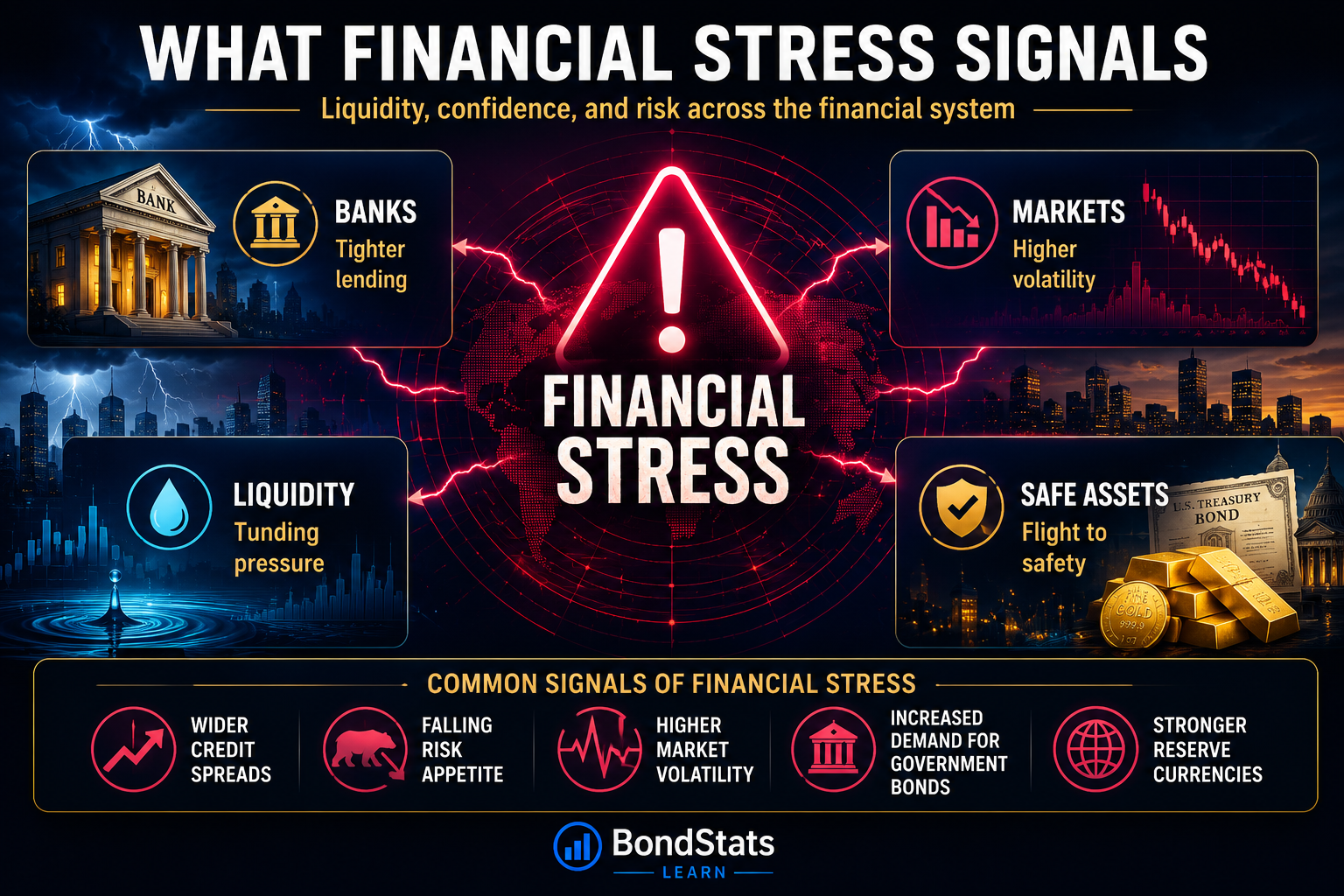
What Is Financial Stress?
Financial stress occurs when investors, banks, and institutions become more cautious about lending, investing, or providing liquidity.
During these periods:
Borrowing becomes more expensive
Risk appetite declines
Market volatility rises
Credit conditions tighten
Investors seek safer assets
Financial stress does not always lead to a crisis, but it often signals growing pressure within the financial system.
What Causes Financial Stress?
Several factors can trigger financial stress:
Rising Interest Rates
Higher rates increase borrowing costs and can expose weaknesses in heavily indebted sectors.
Liquidity Shortages
When funding becomes scarce, institutions may struggle to refinance obligations or maintain market activity.
Credit Concerns
Investors may become worried about defaults, bankruptcies, or the ability of borrowers to repay debt.
Economic Slowdowns
Weak growth often reduces confidence and increases uncertainty across financial markets.
External Shocks
Wars, banking failures, political instability, and unexpected events can quickly increase stress levels.
Common Signals of Financial Stress
Financial stress often appears through observable market indicators:
Wider Credit Spreads
Investors demand higher compensation for holding riskier debt.
Falling Equity Markets
Risk assets often decline as investors reduce exposure.
Increased Market Volatility
Price swings become larger and more frequent.
Safe-Haven Demand
Capital often moves into:
Government bonds
Reserve currencies
Cash
Gold
Tightening Lending Standards
Banks become more selective when extending credit.
Why Financial Stress Matters
Financial stress influences nearly every part of the monetary system.
It affects:
Commercial banks
Government bonds
Financial markets
Capital flows
Currencies
Economic growth
In severe cases, policymakers may intervene through liquidity programs, rate cuts, or emergency measures to stabilize markets.
Why Financial Stress Matters
Financial stress influences nearly every part of the monetary system.
It affects:
Commercial banks
Government bonds
Financial markets
Capital flows
Currencies
Economic growth
In severe cases, policymakers may intervene through liquidity programs, rate cuts, or emergency measures to stabilize markets.
Key Takeaway
Financial stress signals changing confidence within the financial system and when liquidity tightens, risk increases, and investors seek safety, stress levels rise across markets.
Understanding financial stress helps explain why money moves, why credit conditions change, and how financial pressures can influence the broader economy.