
What Inflation Expectations Signal
Understanding how future inflation expectations influence interest rates, markets, central bank policy, and economic behavior.
Introduction
Inflation expectations play a powerful role in the monetary system and markets do not only react to inflation today—they react to what investors, businesses, consumers, and policymakers believe inflation will be in the future. These expectations influence borrowing costs, bond yields, wage negotiations, investment decisions, and central bank actions.
Because expectations can shape economic behavior before inflation actually changes, they are closely monitored across financial markets.
What Are Inflation Expectations?
Inflation expectations reflect beliefs about future price increases.
They help answer a simple question:
How much inflation do people expect over the coming years?
These expectations can be measured through:
Bond markets
Investor surveys
Consumer surveys
Market pricing
Economic forecasts
Why Inflation Expectations Matter
Expectations often influence behavior.
If businesses expect higher inflation:
Prices may rise sooner
Wage demands may increase
Investment decisions may change
If consumers expect higher inflation:
Spending may accelerate
Saving behavior may change
Confidence may shift
As a result, inflation expectations can become self-reinforcing.
What Rising Inflation Expectations Signal
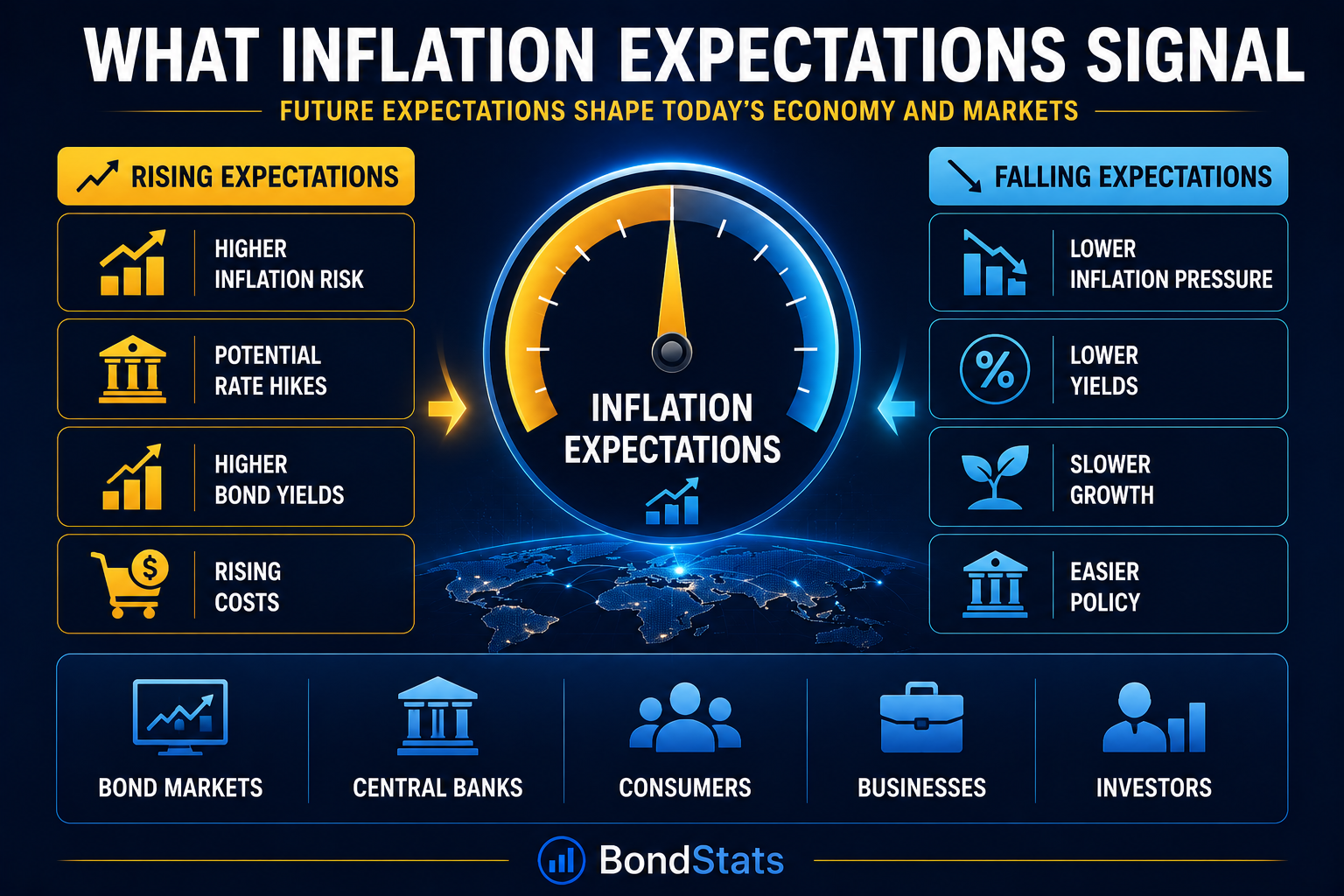
When expectations move higher, markets may be signaling:
Higher Future Inflation
Investors expect stronger price pressures ahead.
Potential Rate Increases
Central banks may respond with tighter monetary policy.
Higher Bond Yields
Investors often demand greater compensation for future inflation.
Stronger Economic Activity
In some cases, rising expectations reflect stronger demand and growth.
Signals
📈 Inflation concerns
📈 Higher yields
📈 Potential rate hikes
📈 Increased economic activity
What Falling Inflation Expectations Signal
When expectations decline, markets may be signaling:
Slower Economic Growth
Demand may be weakening.
Lower Inflation Pressures
Future price increases may be expected to moderate.
Easier Monetary Policy
Central banks may have more flexibility to lower rates.
Lower Bond Yields
Investors may require less inflation compensation.
Signals
📉 Slower growth
📉 Lower yields
📉 Easier policy conditions
📉 Reduced inflation pressure
Inflation Expectations and Bond Markets
Bond investors closely monitor inflation expectations because inflation directly affects the value of future cash flows.
Higher expected inflation often leads to:
Higher Treasury yields
Lower bond prices
Greater uncertainty
Lower expected inflation often supports:
Lower yields
Higher bond prices
More stable financial conditions
Inflation Expectations and the Monetary System
Inflation expectations connect:
Central banks
Bond markets
Consumers
Businesses
Investors
Because expectations influence decisions throughout the economy, they are one of the most important signals in the monetary system.
Key Takeaway
Inflation expectations signal how markets and economic participants view future price pressures and rising expectations often point toward higher inflation risks and tighter policy. Falling expectations may signal weaker growth and lower inflation pressures.
Understanding inflation expectations helps explain movements in interest rates, bond yields, and financial markets.