
How Many Stocks Should You Own?
Learn how portfolio size can influence diversification, risk and long-term investment performance.
What Does Portfolio Size Mean?
Portfolio size refers to the number of different stocks an investor owns. Holding multiple stocks can reduce company-specific risk, but simply owning more stocks does not automatically create a well-diversified portfolio.
The goal is to find a balance between diversification and maintaining a portfolio that is manageable and aligned with your investment strategy.
General Guidelines
Although there is no perfect number, many investors use these general ranges:
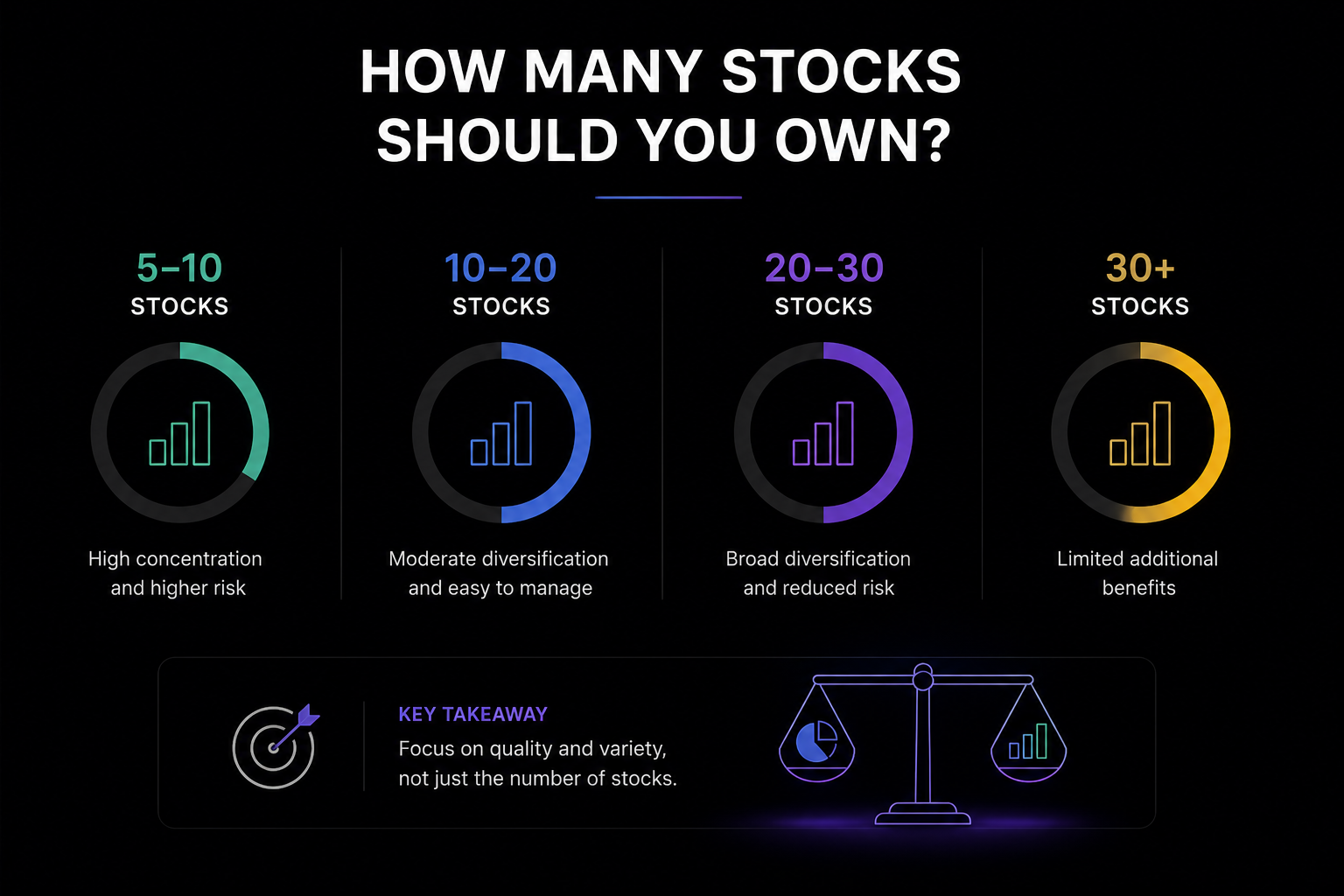
5–10 Stocks – High concentration and higher company-specific risk.
10–20 Stocks – Moderate diversification while remaining easy to monitor.
20–30 Stocks – Broad diversification that may reduce unsystematic risk.
30+ Stocks – Additional diversification benefits become more limited for many investors.
Factors to Consider
The appropriate number of stocks depends on several factors, including:
Investment experience
Risk tolerance
Time available for research
Portfolio size
Investment objectives
Quality Over Quantity
Owning more stocks is not always better. A portfolio of carefully selected companies across different sectors may provide stronger diversification than a larger portfolio concentrated in similar businesses.
Key Takeaways
There is no universal answer to how many stocks an investor should own. The ideal portfolio size depends on individual goals, risk tolerance and investment strategy. For many long-term investors, diversification is achieved not only by the number of holdings but also by their quality and variety.