
BSE Sensex
How the BSE Sensex Measures the Performance of India’s Leading Public Companies
Introduction
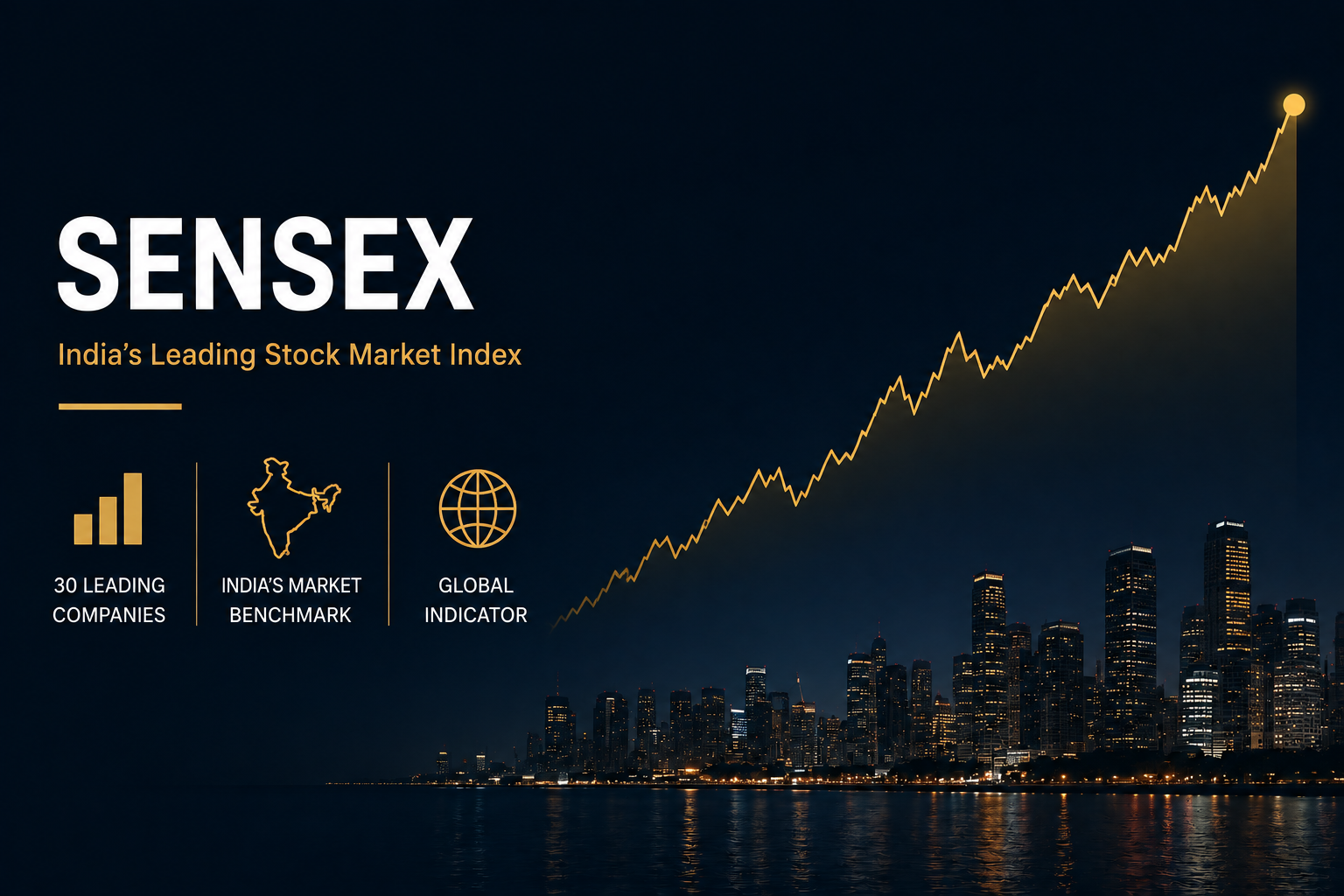
The BSE Sensex is India’s oldest and most widely recognized stock market index. It tracks 30 of the largest and most established companies listed on the Bombay Stock Exchange (BSE), providing investors with a benchmark for the performance of one of the world’s fastest-growing major economies.
As India’s economy continues to expand through industrialization, technology, financial services, and consumer growth, the Sensex remains one of the most closely watched equity indices in Asia.
The History of the BSE Sensex
The BSE Sensex was introduced in 1986 by the Bombay Stock Exchange and has become India’s flagship stock market index and its name, Sensex, combines the words “Sensitive” and “Index,” reflecting its role as a barometer of market sentiment and economic performance.
Today, it serves as one of the primary benchmarks for Indian equities.
How the BSE Sensex Works
The index tracks the 30 largest companies listed on the Bombay Stock Exchange (BSE) using a free-float market-capitalization weighting methodology.
Major sectors include:
Financial Services
Information Technology
Energy
Consumer Goods
Industrials
Healthcare
Telecommunications
The index is reviewed regularly to ensure it represents India’s leading publicly traded companies.
Why the BSE Sensex Matters
The BSE Sensex is widely used to:
Measure India’s stock market performance.
Benchmark investment portfolios.
Support ETFs and index funds.
Track investor confidence.
Monitor corporate earnings.
Assess economic growth.
It remains one of India’s most important financial benchmarks.
The BSE Sensex and Global Markets
Movements in the Sensex often reflect:
India’s economic growth.
Domestic consumption.
Foreign investment flows.
Global investor sentiment.
Corporate earnings.
International economic conditions.
As India becomes an increasingly important global economy, the Sensex plays a growing role in international financial markets.
Advantages of the BSE Sensex
The index offers several advantages:
Exposure to India’s largest companies.
Broad sector diversification.
Free-float market-cap weighting.
High liquidity.
International recognition.
Long performance history.
These characteristics have made it one of Asia’s leading equity benchmarks.
Key Facts
Launched: 1986
Companies: 30
Weighting Method: Free-Float Market Capitalization
Exchange: Bombay Stock Exchange (BSE)
Known For: Benchmark of the Indian Stock Market
Global Importance: One of Asia’s most influential stock market indices