
What Government Bond Yields Signal
Understanding how government bond yields reflect inflation expectations, economic growth, monetary policy, and investor confidence.
Introduction
Government bond yields are among the most closely watched indicators in global finance because they influence borrowing costs, shape investment decisions, and provide insight into how markets view the economy.
When yields move, they often signal changing expectations about growth, inflation, interest rates, and financial conditions.
Because government bonds sit at the foundation of the financial system, their yields help reveal what investors expect for the future.
What Are Government Bond Yields?
A government bond yield represents the return investors receive for lending money to a government.
Examples include:
U.S. Treasury Yields
German Bund Yields
UK Gilt Yields
Japanese Government Bond Yields
Yields move constantly as bond prices change.
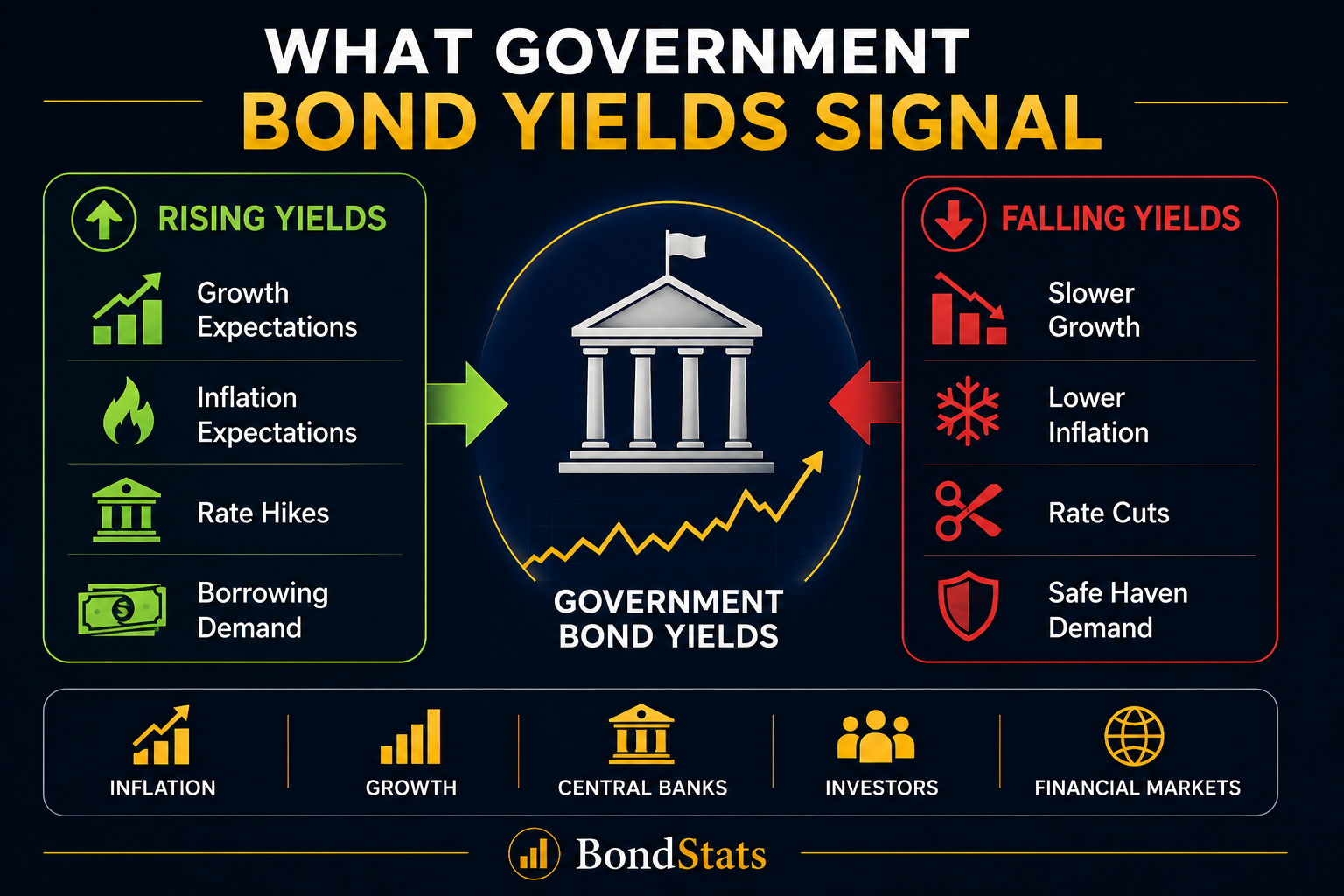
What Rising Bond Yields Signal
Higher yields often signal that investors are demanding greater compensation for lending money.
Higher Inflation Expectations
Investors may expect future inflation to rise.
Stronger Economic Growth
Growth expectations can increase demand for capital and credit.
Higher Interest Rate Expectations
Markets may anticipate tighter central bank policy.
Increased Government Borrowing
More bond issuance can place upward pressure on yields.
Signals
📈 Higher inflation expectations
📈 Stronger growth
📈 Potential rate hikes
📈 Greater borrowing demand
What Falling Bond Yields Signal
Lower yields often reflect greater demand for safety or expectations of slower growth.
Slower Economic Growth
Investors may expect weaker economic activity.
Lower Inflation Expectations
Future price pressures may be moderating.
Easier Monetary Policy
Markets may expect interest rate cuts.
Safe Haven Demand
Investors often buy government bonds during periods of uncertainty.
Signals
📉 Slower growth
📉 Lower inflation expectations
📉 Potential rate cuts
📉 Increased demand for safety
Why Investors Watch Bond Yields
Government bond yields influence:
Mortgage rates
Corporate borrowing costs
Equity valuations
Currency markets
Financial conditions
As a result, bond yields affect nearly every major asset class.
Bond Yields and the Monetary System
Government bonds sit at the center of the modern financial system.
Their yields help connect:
Governments
Investors
Central banks
Commercial banks
Financial markets
Changes in yields can influence the flow of capital throughout the global economy.
What Bond Yields Signal During Financial Stress
During periods of uncertainty, investors often seek safety.
This can lead to:
Rising bond prices
Falling yields
Increased demand for government debt
For this reason, yields are often viewed as a real-time measure of confidence and risk perception.
Key Takeaway
Government bond yields signal how investors view inflation, growth, monetary policy, and risk and rising yields often reflect stronger growth expectations or higher inflation concerns. Falling yields often signal caution, slower growth, or increased demand for safety.
Understanding bond yields helps explain how markets interpret economic conditions and future financial trends.