
DAX
How the DAX Tracks Germany’s Largest Public Companies and Europe’s Leading Economy
Introduction
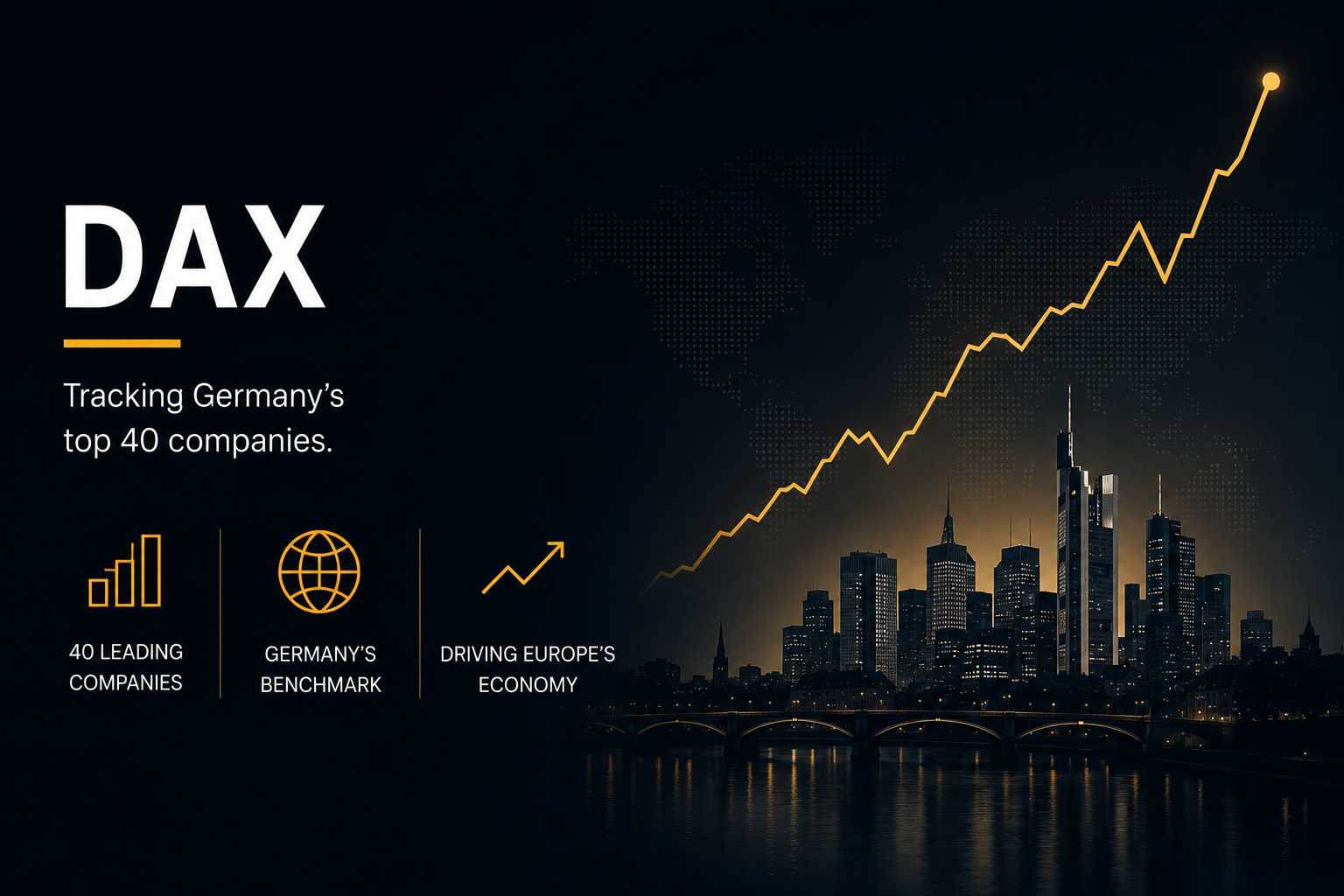
The DAX is Germany’s flagship stock market index and one of Europe’s most influential equity benchmarks. It tracks the 40 largest and most liquid companies listed on the Frankfurt Stock Exchange, representing the strength of Europe’s largest economy.
From global industrial leaders and automotive manufacturers to technology, healthcare, and financial services companies, the DAX offers investors a comprehensive view of Germany’s corporate landscape and its role in the global economy.
The History of the DAX
The DAX (Deutscher Aktienindex) was launched in 1988 as Germany’s primary stock market benchmark. Originally consisting of 30 companies, the index expanded to 40 constituents in 2021, providing broader representation of the German economy and enhancing sector diversification.
Today, the DAX is one of the world’s most closely watched European equity indices.
How the DAX Works
The DAX tracks the 40 largest German companies listed on the Frankfurt Stock Exchange based on free-float market capitalization and trading volume.
Major sectors include:
Industrials
Automotive
Financial Services
Healthcare
Chemicals
Technology
Consumer Goods
The index is reviewed regularly to ensure it reflects Germany’s leading publicly traded companies.
Why the DAX Matters
The DAX is widely used to:
Measure Germany’s stock market performance.
Benchmark investment portfolios.
Track Europe’s largest economy.
Support ETFs and index funds.
Monitor corporate earnings.
Assess investor confidence.
It remains the leading benchmark for German equities.
The DAX and Global Markets
Movements in the DAX often reflect:
European economic growth.
Global trade activity.
Manufacturing performance.
Export demand.
Corporate earnings.
International investor sentiment.
Because many DAX companies generate substantial revenue abroad, the index is closely linked to the global economy.
Advantages of the DAX
The index offers several advantages:
Exposure to Germany’s largest companies.
Broad sector diversification.
Free-float market-cap weighting.
High liquidity.
Strong international recognition.
Long performance history.
These qualities have made it one of Europe’s most important investment benchmarks.
Key Facts
Launched: 1988
Companies: 40
Weighting Method: Free-Float Market Capitalization
Coverage: Germany’s Largest Listed Companies
Known For: Benchmark of the German Stock Market
Global Importance: One of Europe’s leading stock market indices
Conclusion
The DAX provides investors with a comprehensive view of Germany’s largest publicly traded companies and the performance of Europe’s biggest economy. By representing globally competitive businesses across multiple industries, the index serves as a key benchmark for European equity markets and international investment. For investors seeking exposure to Germany and continental Europe, the DAX remains one of the world’s most important stock market indices.