
Swiss Neutrality and Finance
How Neutrality Helped Build Financial Trust
Introduction
Switzerland’s policy of neutrality is one of the most recognized aspects of its national identity and for more than a century, the country has avoided military alliances and maintained a position of political independence. While neutrality is often discussed in diplomatic terms, it has also played an important role in shaping Switzerland’s financial reputation.
Trust, stability, and predictability have become closely associated with both Swiss neutrality and Swiss finance.
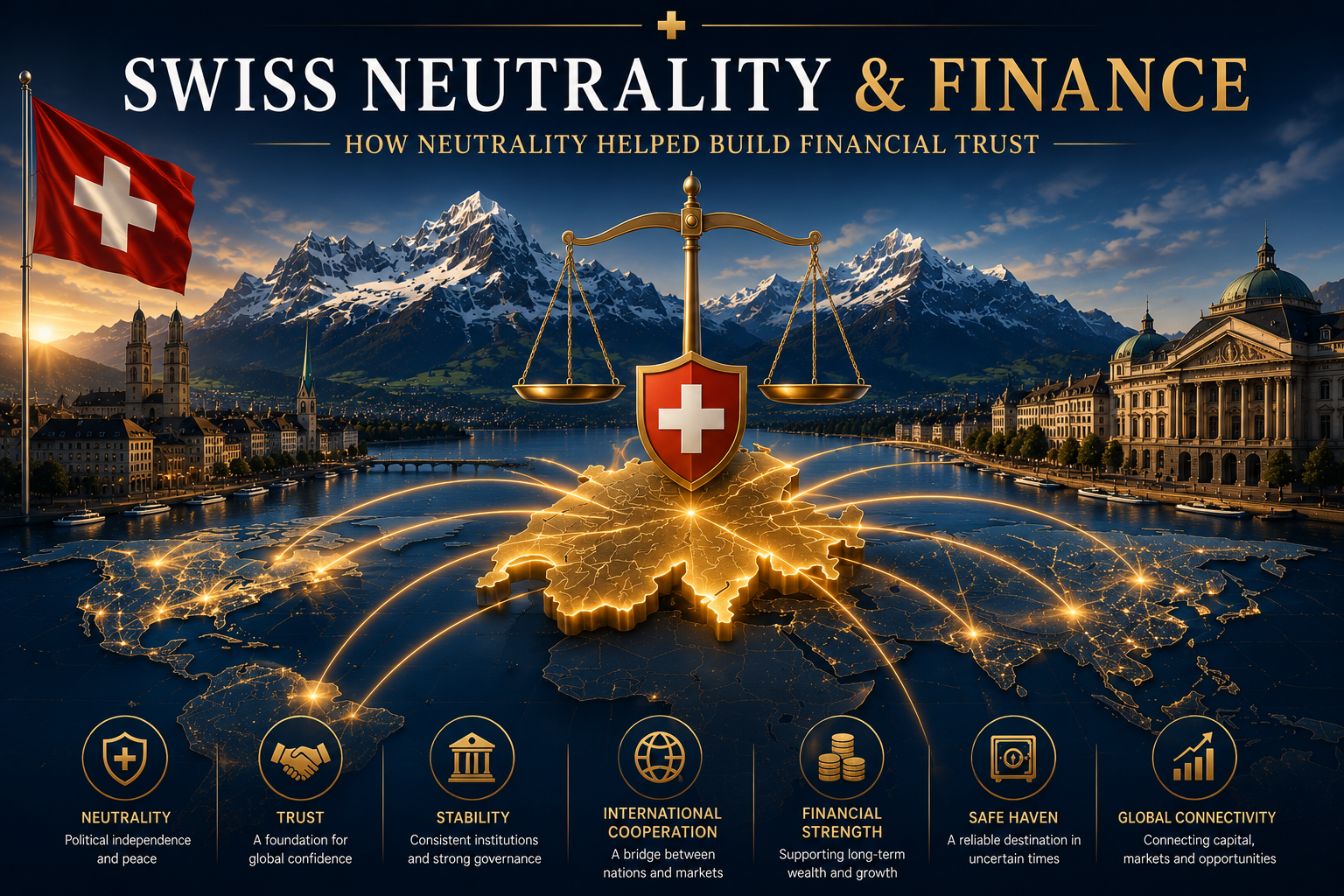
What Is Neutrality?
Neutrality refers to a country’s decision not to participate in military conflicts between other states.
Switzerland formally adopted this approach in the nineteenth century and has maintained it through major periods of global conflict and geopolitical change and this long-standing policy helped create an image of consistency and stability.
Building International Trust
Financial systems rely heavily on trust and investors, businesses, and institutions prefer environments where political and economic conditions remain predictable.
Switzerland’s reputation for neutrality contributed to perceptions of:
Stability
Reliability
Independence
Long-term continuity
These qualities became valuable assets in global finance.
Attracting International Capital
Over time, neutrality helped strengthen confidence in Switzerland as a destination for international capital and investors often viewed Switzerland as a place where assets could be managed within a stable political and legal framework.
Combined with strong institutions and financial expertise, this reputation supported the growth of the Swiss financial sector.
A Platform for International Cooperation
Switzerland has frequently served as a meeting place for international dialogue and cooperation and numerous international organizations and institutions have established a presence in Switzerland, reinforcing its role as a bridge between nations.
This international connectivity has further enhanced Switzerland’s position within global finance.
Stability During Uncertain Times
Periods of geopolitical tension often increase demand for stability.
Historically, Switzerland’s neutrality has been viewed as one factor supporting investor confidence during times of uncertainty and although financial markets are influenced by many variables, political stability remains an important consideration for global investors.
Neutrality and Modern Finance
Today, Switzerland’s role in global finance is supported by far more than neutrality alone.
Key factors include:
Strong institutions
The Swiss Franc
Wealth management expertise
Financial regulation
Capital market infrastructure
However, neutrality remains an important part of the broader foundation of trust that has shaped Switzerland’s financial reputation.
Conclusion
Swiss neutrality has contributed to the development of one of the world’s most trusted financial environments and by supporting stability, predictability, and international confidence, neutrality helped strengthen Switzerland’s position within global finance.
Understanding this connection provides valuable insight into why Switzerland continues to play an influential role in the international financial system.