
Marshall Wace: Combining Human Insight with Quantitative Innovation
How One of Europe’s Largest Hedge Funds Built a Global Multi-Strategy Platform
Introduction
Marshall Wace is one of Europe’s largest and most influential hedge funds. Founded in 1997 by Paul Marshall and Ian Wace, the firm has become known for combining fundamental research with systematic investment techniques, creating a diversified approach that spans global equity and alternative investment strategies.
Today, Marshall Wace manages assets for pension funds, sovereign wealth funds, insurance companies, and institutional investors worldwide.
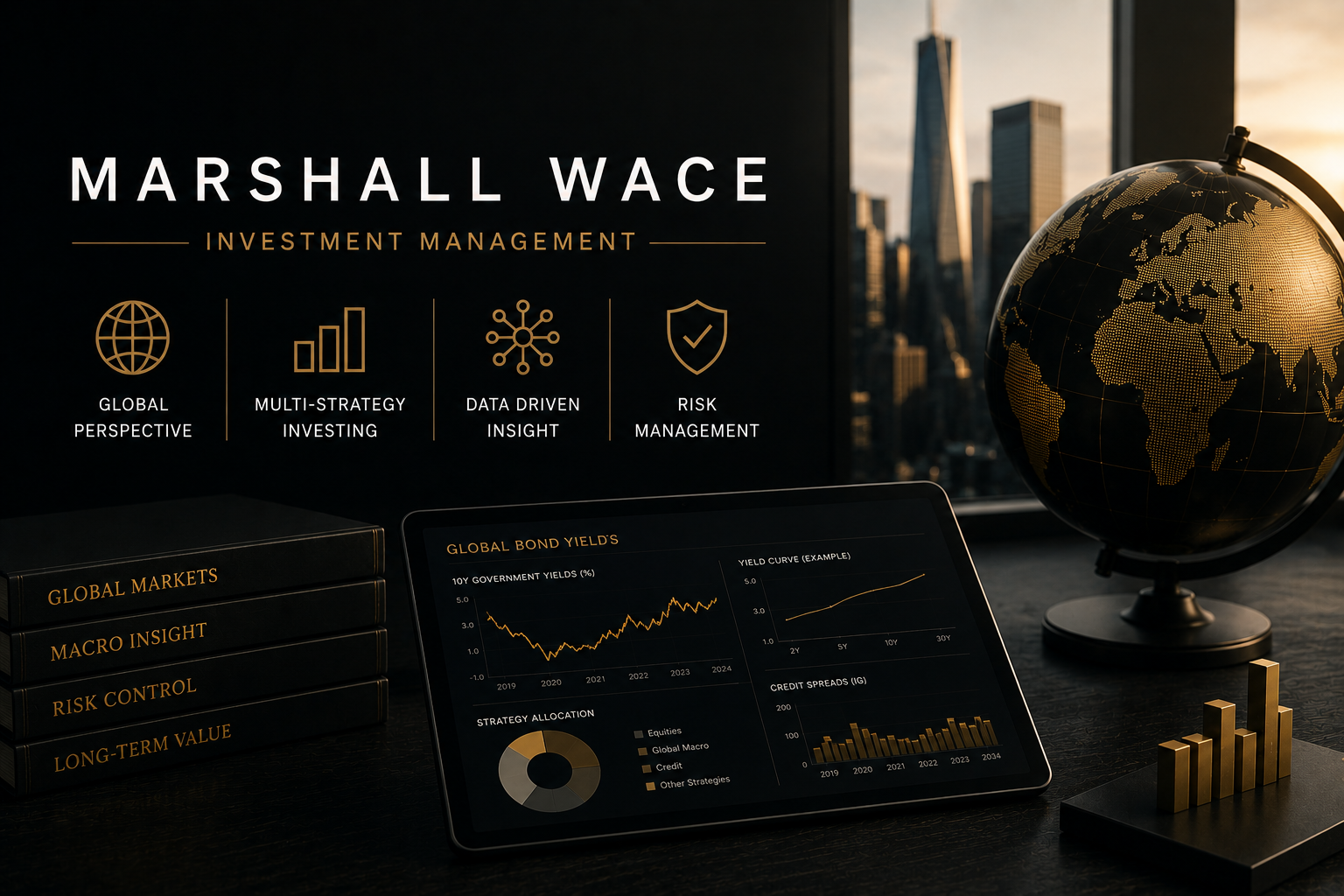
A Hybrid Investment Model
Marshall Wace blends traditional investment analysis with quantitative models but its investment process combines market research, technology, and data-driven decision-making to identify opportunities across global financial markets. This balance between human expertise and systematic analysis has become one of the firm’s defining characteristics.
Investment Strategies
The firm’s platform includes a wide range of investment approaches:
Long/Short Equities
Quantitative Investing
Multi-Strategy Portfolios
Global Equities
Alternative Investments
Risk Management Solutions
This diversified structure allows the firm to adapt to changing market conditions while maintaining disciplined portfolio construction.
Why Bond Markets Matter
Although Marshall Wace is widely recognized for equity investing, government bond markets remain an essential component of its macroeconomic framework.
Changes in sovereign yields influence equity valuations, financing conditions, market liquidity, and investor risk appetite. Bond markets therefore provide valuable signals that support investment decisions across multiple asset classes.
Technology and Data
Technology has become increasingly important within Marshall Wace’s investment process. Advanced analytics, quantitative models, and large datasets help improve research, portfolio construction, and risk management while complementing traditional fundamental analysis.
Risk Management
Managing diversified global portfolios requires continuous monitoring of market risks and Marshall Wace evaluates portfolio exposures, liquidity conditions, volatility, and macroeconomic developments to maintain balanced investment positions across regions and sectors.
This disciplined approach supports long-term portfolio resilience.
What This Means for Bond Markets
For BondStats readers, Marshall Wace illustrates how government bond markets influence far more than fixed-income investing. Interest rates shape equity valuations, credit conditions, capital allocation, and macroeconomic expectations, making sovereign bonds an essential part of institutional investment analysis.
Conclusion
Marshall Wace demonstrates how combining technology, quantitative research, and fundamental analysis can create a flexible investment framework capable of adapting to changing financial markets.
Its investment philosophy reinforces a central principle of modern finance: understanding bond markets provides valuable insight into the broader forces shaping global asset prices.