
The Hidden Role of the People’s Bank of China
Understanding the Institution at the Center of China’s Financial System
Introduction
When investors discuss central banks, institutions such as the U.S. Federal Reserve, the European Central Bank, or the Bank of Japan often dominate the conversation.
Yet one of the world’s most influential monetary authorities receives far less attention:
The People’s Bank of China (PBOC).
As the central bank of the world’s second-largest economy, the PBOC plays a critical role in shaping financial conditions, managing liquidity, influencing credit growth, and supporting economic stability. However, its responsibilities and operating framework differ significantly from many Western central banks.
Understanding the People’s Bank of China is essential for understanding China’s economy, bond markets, and financial system.
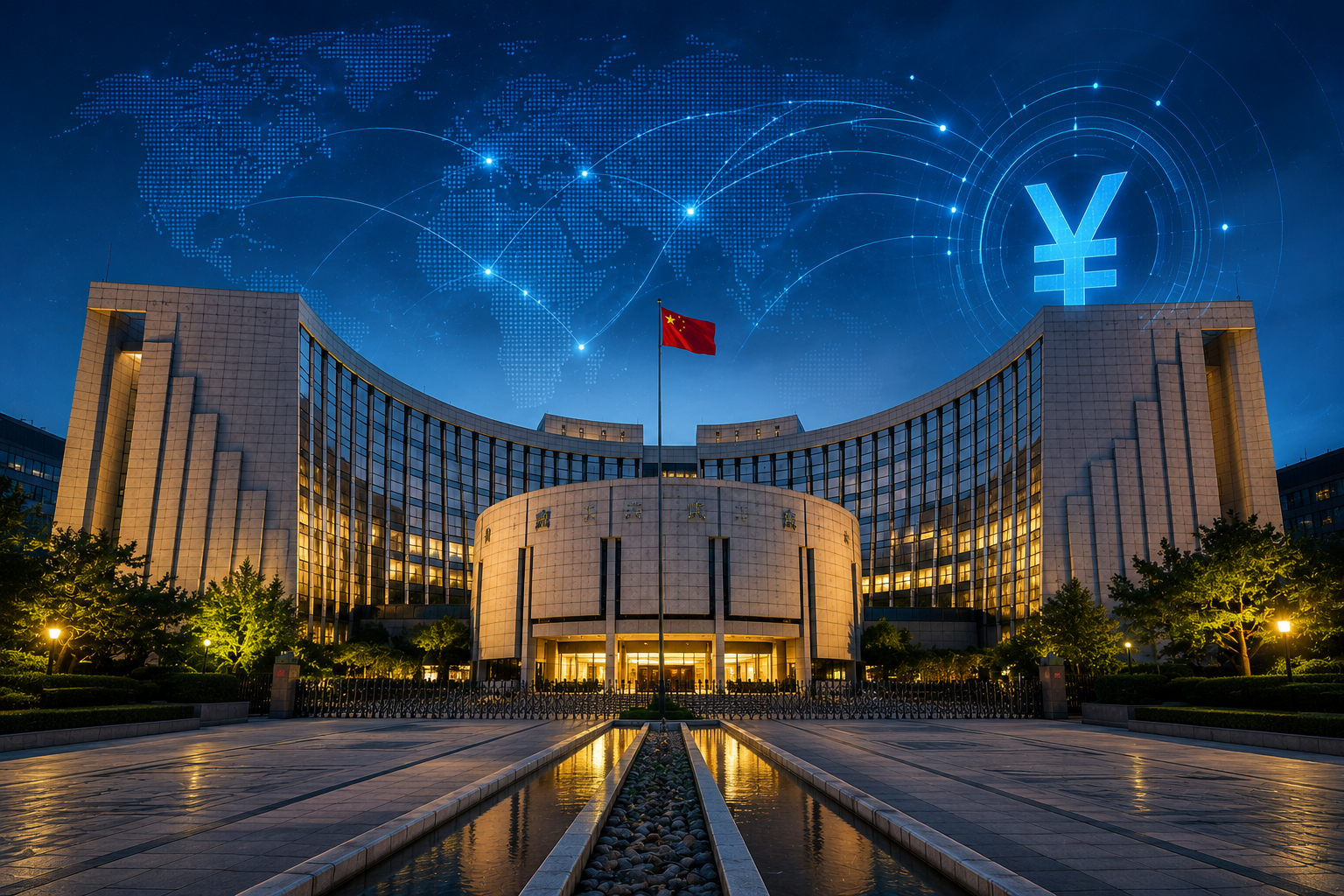
What Is the People’s Bank of China?
The People’s Bank of China serves as China’s central bank.
Its responsibilities include:
Monetary policy
Financial stability
Banking system oversight
Currency management
Liquidity provision
Payment system supervision
The institution plays a central role in maintaining stability across China’s vast financial system.
More Than an Inflation Fighter
Many Western central banks primarily focus on inflation and employment and the PBOC operates with a broader set of objectives.
Policymakers often seek to balance:
Economic growth
Financial stability
Credit conditions
Exchange rate management
Inflation control
This reflects the unique structure of China’s economy and financial system.
Managing Credit Growth
One of the PBOC’s most important responsibilities involves managing credit expansion and a credit plays a crucial role in China’s economy because investment remains a major driver of growth.
The central bank closely monitors:
Bank lending
Corporate borrowing
Local government financing
Property sector credit
Changes in credit conditions can have significant implications for economic activity.
Influencing Bond Markets
The People’s Bank of China has substantial influence over bond markets.
Its policy decisions affect:
Government bond yields
Liquidity conditions
Investor expectations
Credit markets
Financing costs
Because China possesses one of the world’s largest bond markets, PBOC actions are increasingly important for global investors.
The Importance of Liquidity
Liquidity management represents a core function of the central bank.
The PBOC regularly conducts operations designed to:
Stabilize money markets
Support financial institutions
Maintain orderly market conditions
Influence short-term interest rates
These activities help ensure the smooth functioning of the financial system.
Managing the Yuan
Unlike many freely floating currencies, the Chinese yuan operates within a managed framework.
The PBOC plays a significant role in:
Exchange rate policy
Foreign exchange market stability
Capital flow management
Currency confidence
As a result, the central bank’s actions often influence both domestic and international financial markets.
A Different Approach to Monetary Policy
The PBOC uses many of the same tools found in other central banks, including:
Interest rate adjustments
Liquidity operations
Reserve requirement ratios
Open market operations
However, policy implementation often reflects China’s broader economic objectives.
This creates a monetary framework that differs from many Western counterparts.
Why Investors Watch the PBOC
Global investors closely monitor signals from the People’s Bank of China because they can influence:
Economic growth expectations
Bond yields
Currency markets
Commodity demand
Global capital flows
As China’s economy becomes increasingly integrated into global finance, the central bank’s decisions attract greater international attention.
The Financial Stability Mission
The PBOC also plays an important role in managing financial risks.
Areas of focus include:
Property market stress
Banking sector stability
Local government debt
Systemic financial risks
Maintaining stability remains one of the institution’s most important responsibilities.
Why the PBOC Matters for Bond Investors
Bond investors pay close attention to the People’s Bank of China because its policies influence:
Sovereign bond yields
Liquidity conditions
Credit spreads
Market sentiment
Debt financing conditions
Understanding the PBOC helps investors better interpret developments within China’s fixed-income markets.
The Global Significance
China’s financial system is too large to ignore and as the country’s bond markets continue to expand and attract international participation, decisions made by the PBOC increasingly influence global financial conditions.
For investors, understanding China’s central bank is no longer optional but it has become a necessary part of understanding the global economy.
BondStats Research Insight
The People’s Bank of China is often viewed simply as China’s central bank. In reality, its influence extends far beyond traditional monetary policy. Through its management of credit, liquidity, currency stability, and financial risk, the PBOC plays a central role in shaping both China’s economy and its bond markets.
Final Thoughts
The People’s Bank of China sits at the heart of one of the world’s most important financial systems.
Its responsibilities extend beyond inflation and interest rates to include credit growth, financial stability, currency management, and economic development.
As China’s influence within global finance continues to grow, understanding the hidden role of the PBOC may become increasingly important for investors, policymakers, and anyone seeking to understand the future of international financial markets.