
ETF vs Mutual Fund
Understanding the key differences between two of the world’s most popular investment vehicles
What Is an ETF?
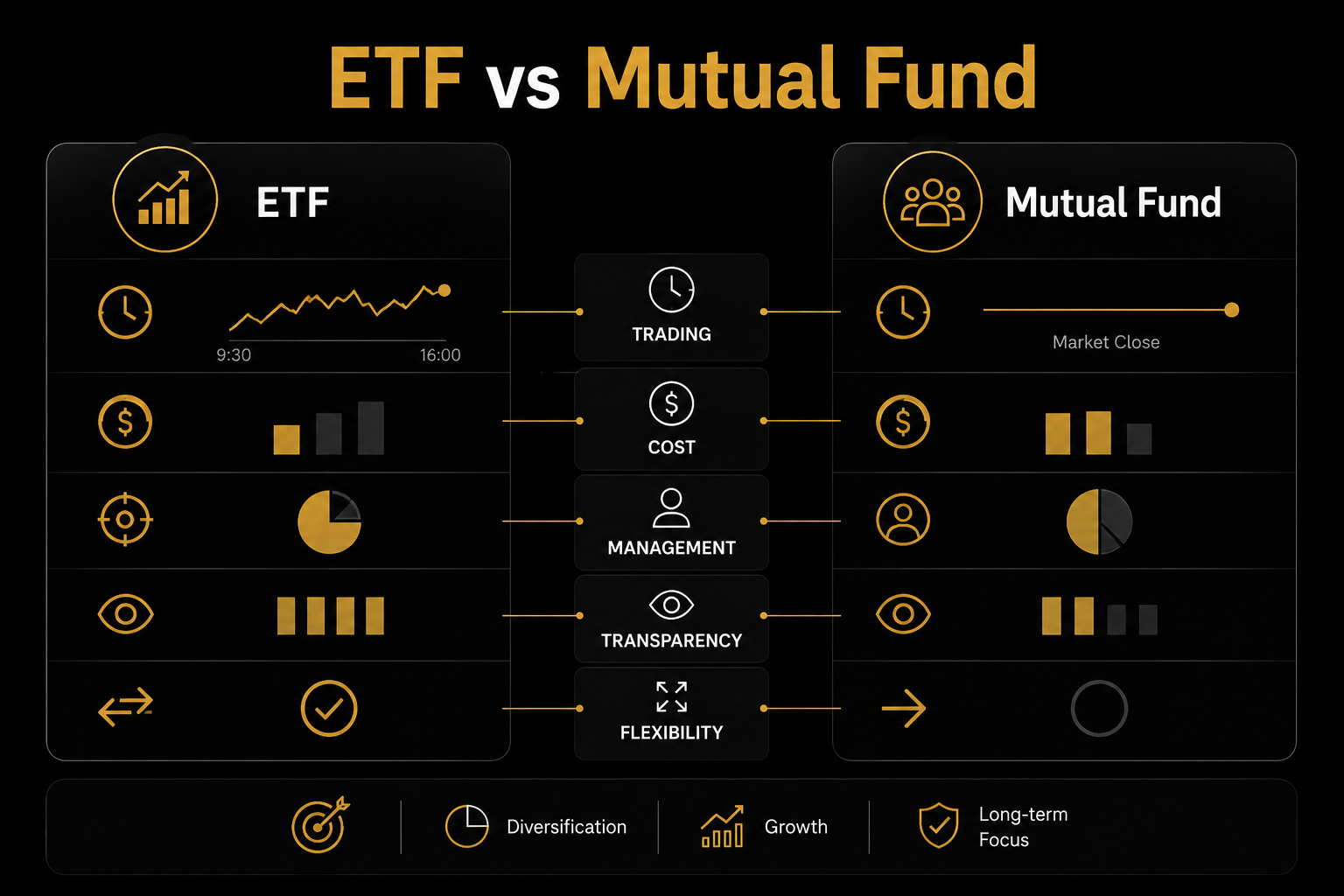
An Exchange-Traded Fund (ETF) is an investment fund that holds a diversified portfolio of assets and trades on a stock exchange throughout the trading day.
ETF prices change continuously as investors buy and sell shares in the market.
What Is a Mutual Fund?
A mutual fund pools money from multiple investors to invest in a diversified portfolio of securities. Unlike ETFs, mutual funds are typically priced only once per day after the market closes.
Key Differences
Trading
ETFs
Trade throughout the trading day
Prices fluctuate continuously
Bought and sold like stocks
Mutual Funds
Trade once per day
Transactions occur at the end-of-day net asset value (NAV)
Costs
ETFs
Generally have:
Lower expense ratios
Lower management costs
Greater tax efficiency in many markets
Mutual Funds
May have:
Higher management fees
Active management costs
Sales loads in some cases
Investment Style
ETFs
Often follow passive investment strategies by tracking market indexes.
Mutual Funds
Can be:
Actively managed
Passively managed
Active managers attempt to outperform a benchmark through security selection.
Transparency
ETFs
Portfolio holdings are typically disclosed frequently.
Mutual Funds
Portfolio holdings are generally reported less frequently.
Similarities
Both ETFs and mutual funds:
Provide diversification
Pool investor capital
Invest in multiple securities
Can hold stocks, bonds and other assets
Support long-term investing
Advantages of ETFs
Lower costs
Intraday trading
Broad diversification
Greater flexibility
Tax efficiency in many jurisdictions
Advantages of Mutual Funds
Professional management
Automatic investment plans
Broad investment choices
Active management options
Which Is Better?
Neither investment vehicle is universally better.
The choice depends on:
Investment goals
Risk tolerance
Time horizon
Cost preferences
Desired investment strategy
Many investors use both ETFs and mutual funds within the same portfolio.
Common Misconceptions
ETFs are not only for experienced investors and mutual funds are not always actively managed.
Both investment vehicles can play important roles in diversified, long-term portfolios.
Key Takeaways
✓ ETFs trade throughout the day, while mutual funds are typically priced once daily.
✓ Both provide diversified exposure to financial markets.
✓ ETFs generally offer lower costs and greater trading flexibility.
✓ Mutual funds provide access to both active and passive investment strategies.
✓ The most suitable choice depends on individual investment objectives and preferences.