
What Is the Gold Standard?
Understanding the Monetary System Backed by Gold
Understanding the Monetary System Backed by Gold
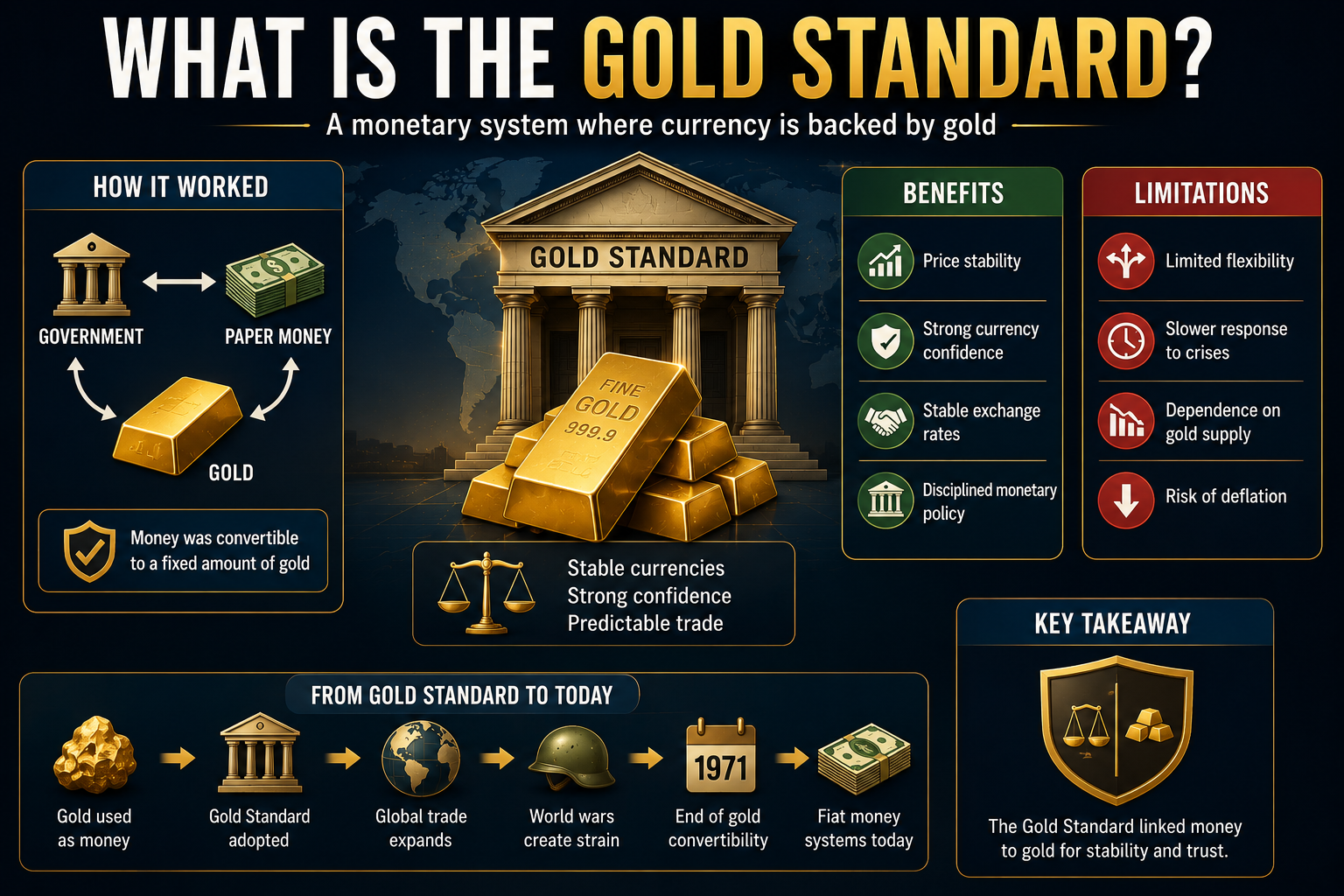
The Gold Standard was a monetary system in which a country’s currency was directly linked to a fixed amount of gold. Under this system, governments agreed to exchange paper money for gold at a predetermined rate, giving currencies a tangible backing.
Why Was Gold Used?
Gold was widely accepted because it was:
• Durable
• Scarce
• Divisible
• Portable
• Trusted across borders
These characteristics made gold an effective store of value and medium of exchange.
How Did the Gold Standard Work?
Countries fixed the value of their currencies to gold.
As a result:
• Exchange rates remained relatively stable
• Money supply was linked to gold reserves
• Governments had limited ability to create new money
• International trade became more predictable
Advantages of the Gold Standard
The system offered several benefits:
• Long-term price stability
• Strong confidence in currency
• Disciplined monetary policy
• Stable exchange rates
• Reduced inflation risk
Challenges of the Gold Standard
Despite its advantages, the system also had limitations:
• Limited monetary flexibility
• Slower economic responses to crises
• Dependence on gold supply
• Risk of deflation
• Constraints on economic growth
Why Did the Gold Standard End?
During the 20th century, governments increasingly needed flexibility to respond to wars, recessions, and financial crises.
The global gold-based system gradually weakened and the final link between the U.S. Dollar and gold ended in 1971 when the United States suspended gold convertibility.
Most countries now operate under fiat money systems.
Conclusion
The Gold Standard was one of history’s most influential monetary systems, providing stability through a direct link between money and gold. While it helped maintain confidence and limit inflation, its lack of flexibility eventually led countries to adopt modern fiat currencies that are managed by central banks rather than backed by precious metals.