
How Singapore Funds Infrastructure Without Excessive Debt
Understanding how long-term planning allows Singapore to finance major infrastructure while maintaining strong public finances.
Introduction
Around the world, governments often borrow heavily to finance large infrastructure projects such as airports, rail networks, ports, and public housing. Singapore follows a different approach.
Through decades of fiscal discipline, long-term planning, and carefully designed financing mechanisms, the country has expanded its world-class infrastructure while maintaining one of the strongest sovereign balance sheets in the world.
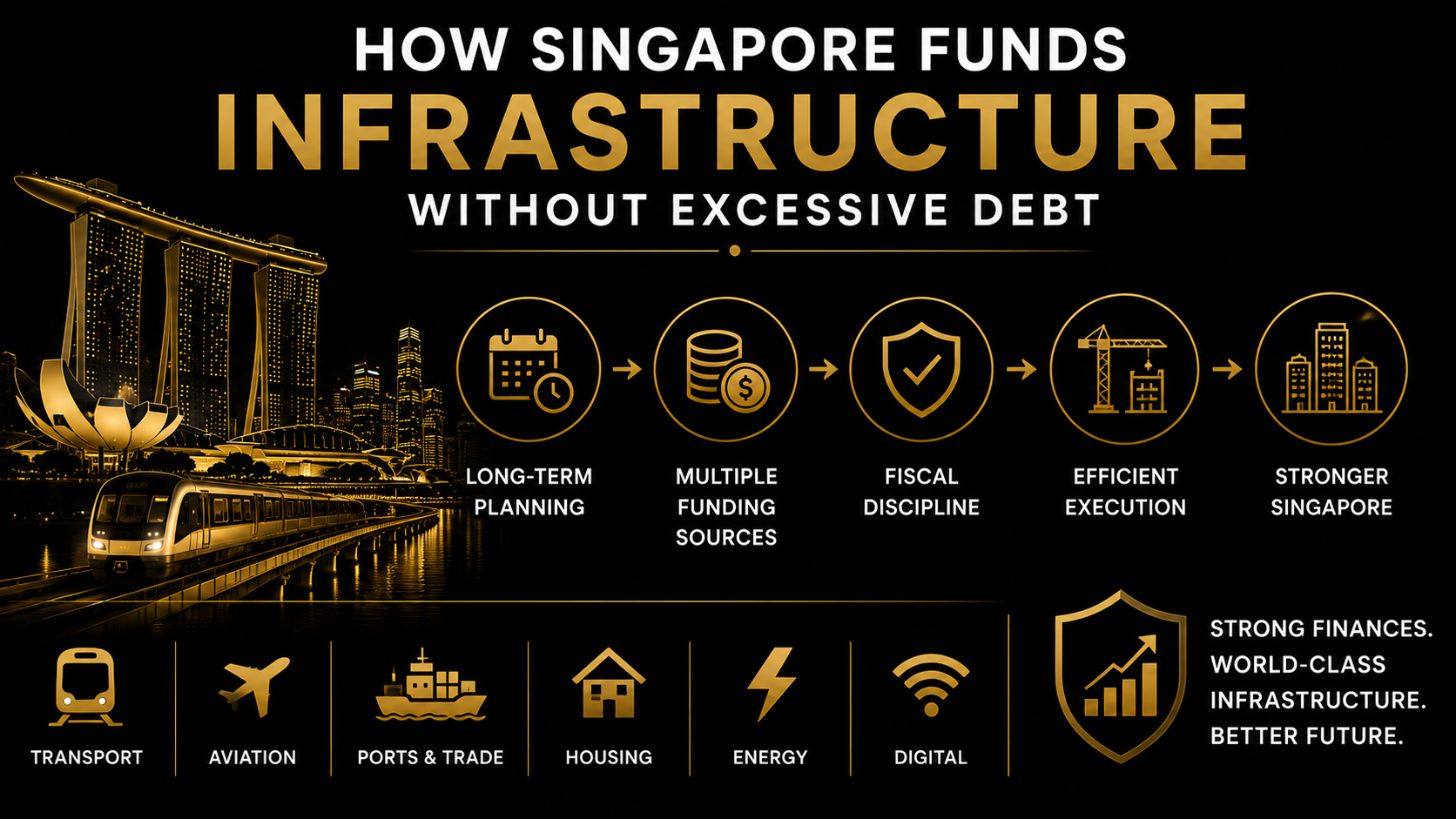
Singapore combines long-term investment with fiscal discipline to build infrastructure without relying on excessive debt.
Why Infrastructure Matters
Modern infrastructure supports long-term economic growth.
It improves:
Transportation
Trade
Housing
Energy
Digital connectivity
Business competitiveness
For a small, open economy like Singapore, efficient infrastructure is considered a strategic national asset.
Long-Term Planning
Singapore plans many infrastructure projects years or even decades in advance.
This allows policymakers to:
Spread investment over time
Prioritize national needs
Reduce financing pressure
Improve project efficiency
Long-term planning reduces the need for sudden increases in borrowing.
Multiple Sources of Funding
Rather than depending on large amounts of debt, Singapore finances infrastructure through a combination of:
Government revenue
Long-term fiscal planning
Investment income
Carefully managed borrowing for selected projects
This diversified approach strengthens financial resilience.
Maintaining Fiscal Discipline
Infrastructure investment is balanced with Singapore’s broader fiscal framework.
Key principles include:
Responsible budgeting
Sustainable financing
Protection of national reserves
Careful evaluation of long-term costs
These safeguards help ensure that major projects remain affordable.
Benefits for Investors
Strong infrastructure supports Singapore’s long-term investment environment.
It contributes to:
Economic productivity
Business confidence
Stable public finances
High sovereign credit quality
Well-managed infrastructure investment is one reason Singapore remains an attractive destination for global capital.
Key Takeaways
Singapore treats infrastructure as a long-term national investment.
Projects are supported by careful fiscal planning.
Funding comes from multiple sustainable sources rather than excessive borrowing.
Fiscal discipline remains central to infrastructure financing.
Strong infrastructure supports long-term economic growth and investor confidence.