
What Is Quantitative Easing?
Understanding How Central Banks Create Liquidity
How Central Banks Create Liquidity
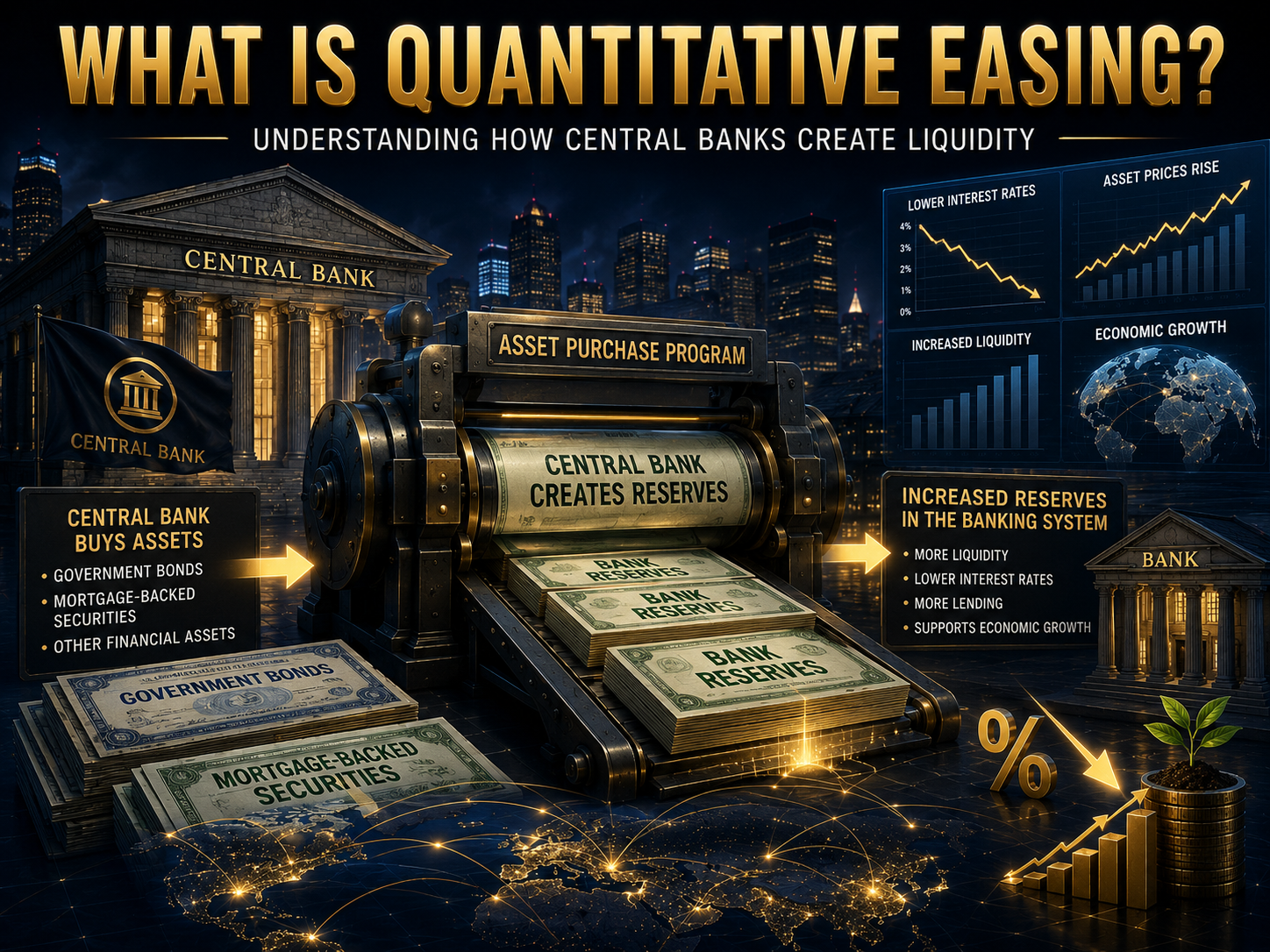
Quantitative Easing (QE) is a monetary policy used by central banks to support the economy during periods of weak growth or financial stress.
Under QE, central banks purchase financial assets, such as government bonds, from banks and investors. In return, they create new reserves within the banking system.
Why Do Central Banks Use QE?
When interest rates are already very low, central banks may have limited ability to stimulate the economy through traditional rate cuts.
QE is designed to:
• Increase liquidity in financial markets
• Lower long-term borrowing costs
• Support lending and investment
• Encourage economic activity
• Stabilize financial systems during crises
How Does QE Work?
A central bank buys government bonds and other securities from financial institutions.
As a result:
• Banks receive additional reserves
• Bond prices tend to rise
• Bond yields generally fall
• Borrowing becomes cheaper
• Investors may shift into riskier assets
Potential Benefits of QE
Quantitative Easing can help prevent financial crises from worsening and support economic recovery.
Benefits may include:
• Improved market liquidity
• Lower interest rates
• Higher asset prices
• Increased economic confidence
• Stronger credit growth
Potential Risks of QE
While QE can support growth, it may also create challenges.
Potential risks include:
• Asset price bubbles
• Rising inflation pressures
• Increased wealth inequality
• Excessive risk-taking in markets
• Difficulties unwinding central bank balance sheets
Quantitative Easing in Practice
Major central banks including the Federal Reserve, the European Central Bank, the Bank of England, and the Bank of Japan have used QE during economic downturns and financial crises.
The policy became especially prominent following the 2008 Global Financial Crisis and during the COVID-19 pandemic.
Conclusion
Quantitative Easing is a powerful monetary policy tool used when traditional interest rate policies become less effective. By increasing liquidity and lowering borrowing costs, QE can help support economic growth and financial stability, but it also carries long-term risks that policymakers must carefully manage.