
Fractional Reserve Banking
How Banks Multiply Money Through Lending
Introduction
Fractional reserve banking is one of the foundations of the modern financial system and it allows banks to hold only a portion of customer deposits as reserves while lending the remaining funds to households and businesses.
This process helps support economic activity, credit creation, and financial growth.
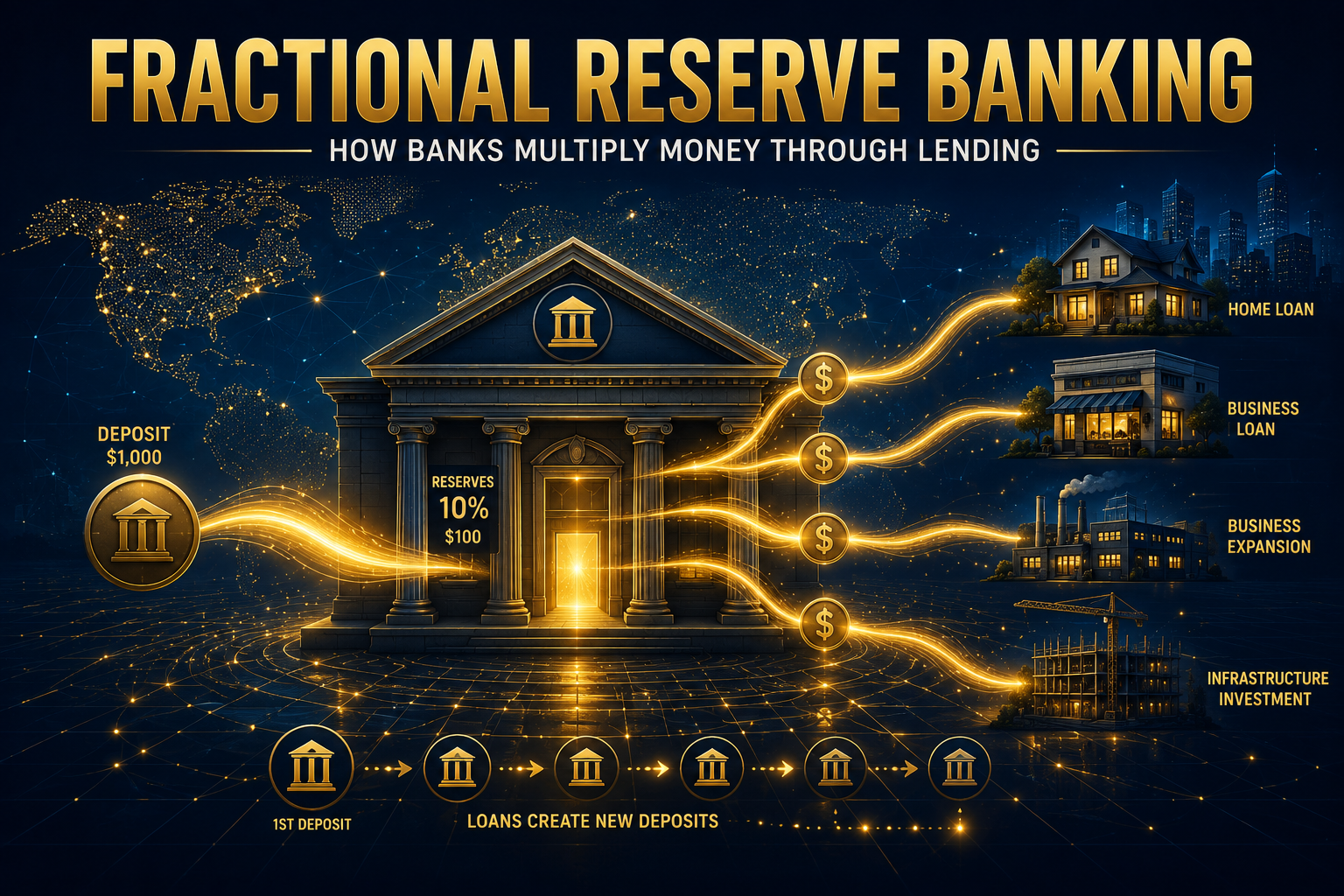
What Is Fractional Reserve Banking?
Under a fractional reserve system, banks keep only a fraction of deposits available as reserves and the remaining funds can be used to make loans.
As loans are issued and deposited elsewhere in the banking system, additional lending becomes possible. This process expands the amount of money circulating within the economy.
Why Does It Matter?
Fractional reserve banking helps:
Support economic growth
Increase credit availability
Finance businesses and households
Facilitate investment
Improve financial efficiency
Without it, lending capacity would be significantly more limited.
The Link to Money Creation
Because loans create new deposits, fractional reserve banking is closely connected to modern money creation and commercial banks play a major role in expanding the money supply through lending activity.
Risks and Stability
While the system supports growth, it also relies on confidence and if large numbers of depositors withdraw funds simultaneously, banks may face liquidity pressures.
This is one reason central banks and financial regulations play an important role in maintaining stability.
Conclusion
Fractional reserve banking allows modern economies to expand credit and support growth through the banking system and although often misunderstood, it remains one of the key mechanisms behind lending, money creation, and economic activity.