
Deflation Explained
When Money Gains Purchasing Power
Introduction
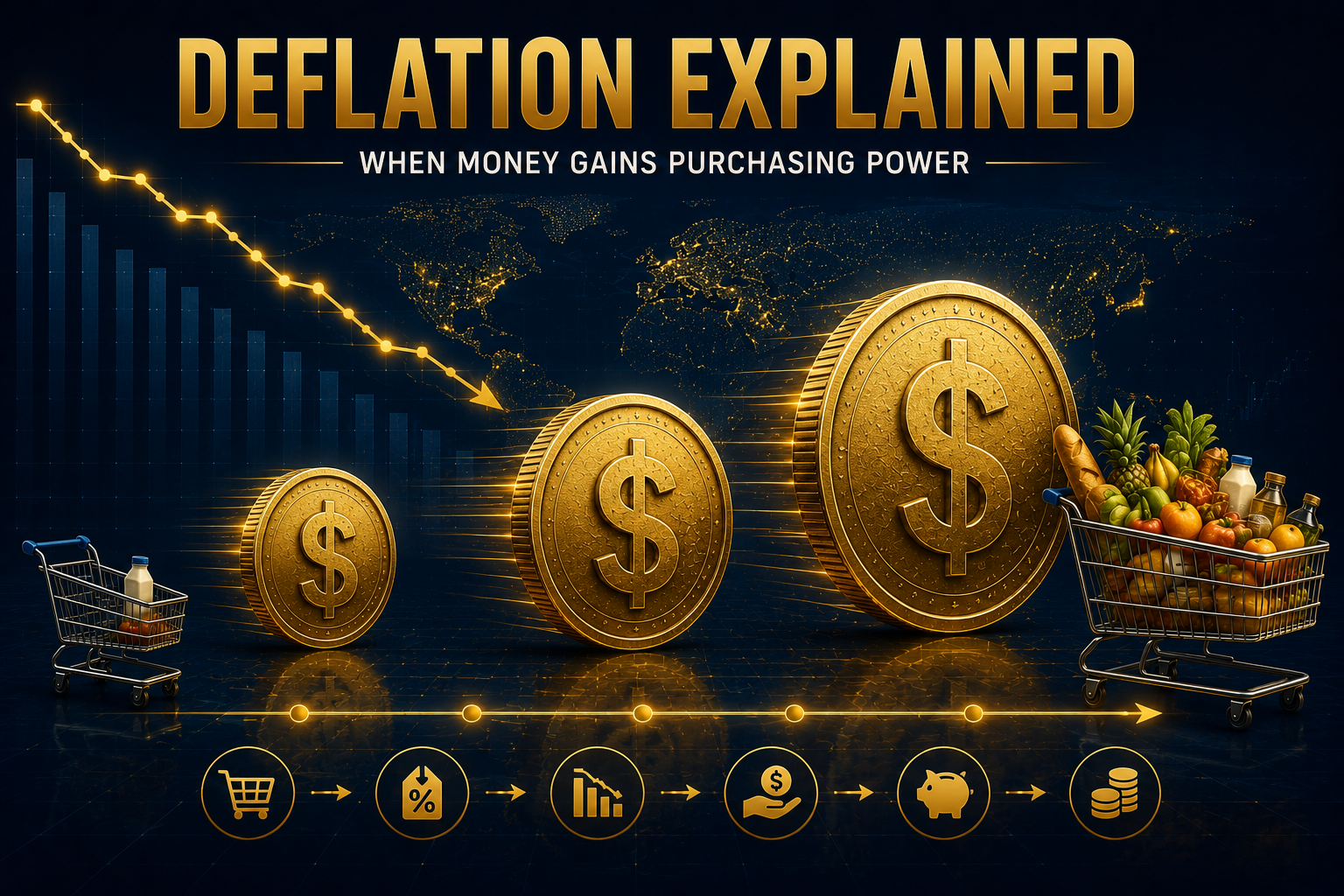
While inflation causes prices to rise, deflation is the opposite and deflation occurs when the general level of prices falls over time, increasing the purchasing power of money.
Although lower prices may seem beneficial at first, prolonged deflation can create significant economic challenges.
What Is Deflation?
Deflation refers to a broad decline in prices across an economy and when deflation occurs, each unit of currency can purchase more goods and services than before.
As a result, the value of money increases over time.
Why Does Deflation Happen?
Several factors can contribute to deflation:
Weak consumer demand
Economic recessions
Falling credit growth
Technological improvements
Declining asset prices
In many cases, deflation is associated with slower economic activity.
Deflation and Spending
When prices are expected to continue falling, consumers and businesses may delay purchases and this can reduce economic activity and slow growth even further.
Deflation and Debt
Deflation can increase the real burden of debt and as prices and incomes fall, existing debt becomes more difficult to repay.
This is one reason policymakers often view persistent deflation as a risk.
How Central Banks Respond
Central banks generally aim to prevent prolonged deflation.
They may:
Lower interest rates
Increase liquidity
Support lending
Stimulate economic activity
Their goal is to maintain stable prices and support economic growth.
Conclusion
Deflation increases the purchasing power of money but can also weaken spending, investment, and economic activity.
Understanding deflation helps explain central bank policies, debt dynamics, and the broader forces that influence financial markets.