
What Is Money?
Understanding the Foundation of the Modern Financial System
Introduction
Money is one of the most important inventions in human history because it allows people to exchange goods and services, store value over time, and measure economic activity.
Although money is used every day, few people stop to ask a simple question:
What is money?
Understanding money is the first step toward understanding finance, banking, inflation, and the global economy.
The Three Functions of Money
For something to function as money, it typically serves three purposes:
Medium of Exchange
Money allows people to trade without needing direct barter.
Store of Value
Money enables wealth to be saved and used in the future.
Unit of Account
Money provides a common way to measure and compare value.
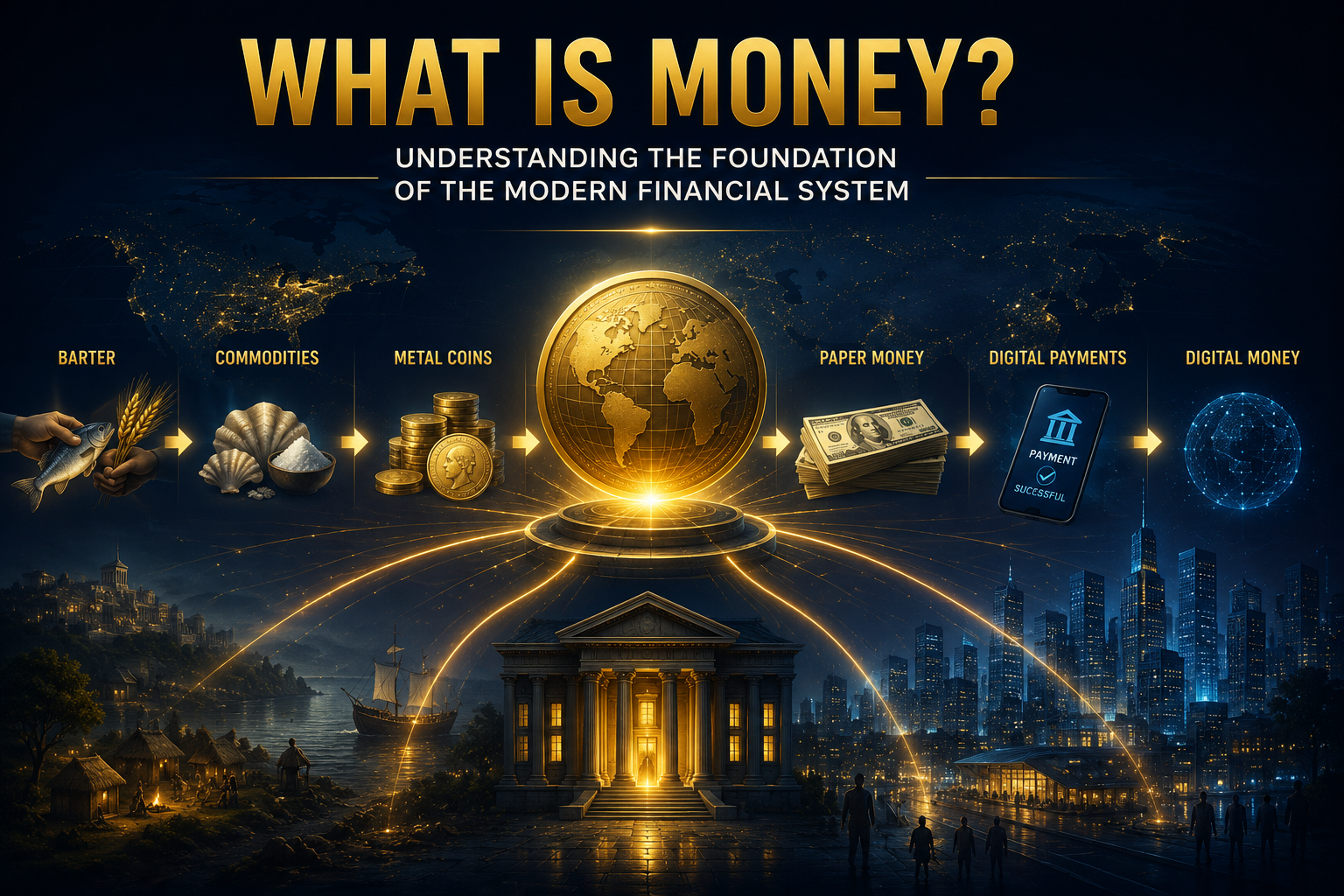
From Barter to Modern Money
Before money existed, people relied on barter and this system required both parties to want exactly what the other offered.
As economies became more complex, societies began using various forms of money, including:
Shells
Salt
Precious metals
Gold and silver coins
Over time, paper money and digital money replaced most physical commodity-based systems.
Money Today
Most money in modern economies is not gold or cash and instead, it exists primarily as digital entries within the banking system.
Bank deposits, electronic transfers, and digital payments now account for the majority of economic transactions worldwide.
Why Money Matters
Money influences nearly every aspect of economic life.
It affects:
Consumption
Saving
Investment
Interest rates
Inflation
Economic growth
Because of its central role, money remains at the heart of modern financial systems.
Conclusion
Money is more than paper, coins, or numbers on a screen and it is a social and economic tool that enables trade, stores value, and supports economic activity.
Understanding money provides the foundation for understanding banking, bonds, central banks, and the global financial system.