
Third-Party Risk in Finance
How cloud providers, software vendors, data services and outsourced operations expand the financial security perimeter
Introduction
Financial institutions increasingly depend on technology they do not own. Cloud platforms, software vendors, market-data providers, payment processors and specialist service firms can all sit inside a bank’s critical operating model. Outsourcing can improve efficiency and resilience, but it also means that part of the institution’s security perimeter now lies outside its direct administrative control.
Third-party risk is therefore not just a procurement question. The important issue is whether a vendor failure can interrupt a material financial function and whether many institutions depend on the same provider. A supplier can be individually well managed yet still create systemic concentration if too much of the market relies on the same service.
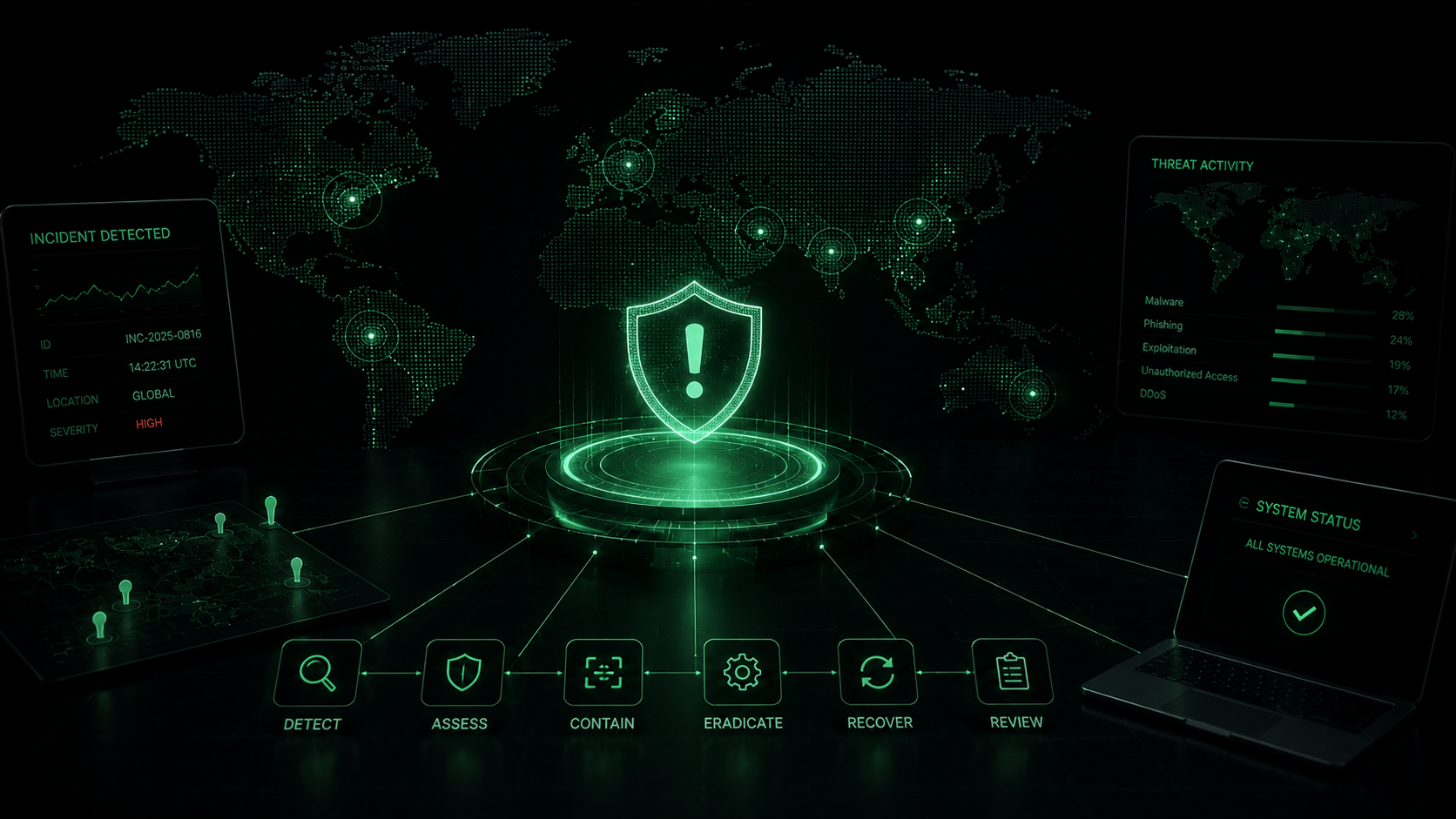
The Perimeter No Longer Ends at the Bank
Modern applications often call external APIs, run on shared cloud infrastructure or rely on managed software components. That means an institution may be secure internally while remaining exposed through a service account, vendor update or external platform on which a critical process depends. Security teams therefore need visibility into the complete service chain rather than treating the corporate network boundary as the end of responsibility.
This changes accountability without removing it. A bank may outsource the operation of a service, but it cannot outsource the economic consequences of that service failing. Security teams therefore need to understand not only the vendor contract but also the underlying architecture: which data flows through the provider, which identities it can access, what subcontractors sit behind it and how the bank would operate if the service disappeared. The perimeter becomes a map of dependencies rather than a physical network boundary.
Concentration Risk
The same provider can support dozens or hundreds of financial institutions, creating efficiency but also correlated exposure. A disruption that would be manageable for one bank becomes more serious when many participants lose the same capability simultaneously. This is particularly relevant for cloud regions, identity services, communications infrastructure and specialized financial software. Concentration risk asks a different question from ordinary vendor risk: not is this supplier good? but what happens to the market if this supplier is unavailable?
The analytical challenge is that concentration can be hidden several layers below the direct supplier relationship. Different banks may contract with different software vendors that ultimately run in the same cloud region, depend on the same identity provider or use the same market-data feed. Correlation therefore cannot be measured from a vendor register alone. Institutions and supervisors increasingly need service-level mapping that reveals where apparently diversified arrangements converge on the same critical infrastructure.
Security Through Contracts Is Not Enough
Contracts can define security requirements, notification duties and recovery objectives, but they cannot create operational resilience by themselves. Institutions need evidence that controls work, a realistic understanding of subcontractors and technical dependencies, and a plan for operating if the vendor is degraded. Exit clauses also have limited value when the service cannot be replaced quickly. The strongest arrangements combine contractual governance with architectural choices that reduce dependence on any single failure point.
Contracts are useful for establishing expectations and rights, but they operate after architecture has already created dependency. If a critical service requires months to replace, an exit clause provides limited protection during a live outage. Resilient institutions therefore combine contractual safeguards with technical choices such as portability, alternate providers, data backups and clearly tested manual or degraded modes. The strongest third-party strategy reduces the consequences of failure rather than assuming that legal remedies will prevent it.
Mapping Dependencies
Dependency mapping links business services to the applications, infrastructure and vendors required to deliver them. This allows institutions to identify hidden common dependencies and prioritize resilience investment around economically important functions. It also improves incident response because teams can determine which services are at risk when a supplier reports a problem. Without that map, third-party risk remains a list of vendors rather than an understanding of how external failure can reach the balance sheet.
A mature map goes beyond naming systems and vendors. It connects business services to their required applications, data, identities, locations, network paths and operational teams, allowing the institution to identify the minimum set of capabilities needed to remain functional. During an incident, that map helps leaders prioritize recovery based on financial importance rather than technical visibility. It also exposes single points of failure that may have been invisible when each project was assessed in isolation.
Conclusion
Third-party risk has become part of core financial security because institutions now operate through extended technology ecosystems. The central challenge is not to eliminate external providers but to understand and constrain dependency on them. For markets, the most important vulnerabilities may be the shared services that sit behind many firms at once, turning an ordinary supplier incident into a source of correlated operational stress.
For investors and risk managers, third-party security deserves attention because it can create losses without originating inside the institution being analyzed. Shared technology has improved efficiency across finance, but it has also moved some operational risk into common infrastructure. The institutions best positioned to manage that trade-off are those that know exactly where their critical dependencies sit, can detect correlated exposure and have credible alternatives when an external service fails.